
By the time some Rice University graduate students arrive in electrical and computer engineering, Schuyler Boss has known them for years. In eight years at Rice, Boss has met undergraduates, talked them into giving graduate school a try and stayed in touch through their time in the program.
“I wasn't expecting to be this involved with students,” Boss said. “I thought it was going to be more behind the scenes, but the student interaction has made it all worth it for me.”
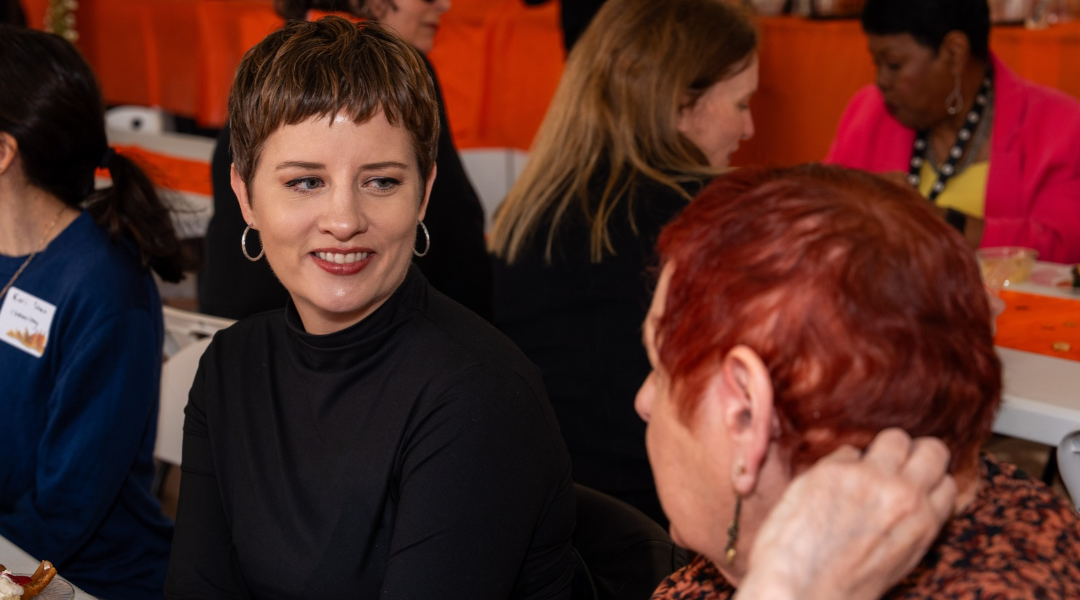
At a Thanksgiving lunch honoring Rice’s graduate program administrators, Boss and other colleagues spoke about work that can begin with an application and continue through a dissertation defense. Rice’s graduate program directory names 35 people across 49 listings, from architecture and music to engineering and the humanities. Some serve several programs. In others, one person fields questions from applicants while a colleague works with enrolled students.
For Crystal Washington, a graduate program coordinator in computational applied mathematics and operations research, the job includes recruiting students, processing reimbursements and sometimes reading abstracts for dissertation defenses. She is still learning the range of questions that come her way.
“Every student needs something different,” Washington said.
Some of her favorite conversations happen when doctoral students explain the math they are learning. Washington said she sometimes nods along before admitting just how unfamiliar the material is. Those exchanges give her a chance to learn about the people whose defenses she helps schedule.
Hannah Wilkes got an early look at graduate administration. Her mother worked in Rice’s Office of Graduate and Postdoctoral Studies, and Wilkes spent time there as a child. As a teenager, she helped process transcripts during a summer job. Today, students in statistics come to her with questions about course schedules, graduation paperwork and where to find the policy that applies to them.
“And we don't know everything, but we can point them in the right direction,” Wilkes said.
For Lydia Westbrook, who supports graduate students in history, religion and creative writing, 10 years at Rice have given her the chance to see what happens after those early questions get answered. She takes particular satisfaction in watching students who struggled at first find their footing and graduate. Some international students, she said, arrive at Rice without ever having been to the United States.
“Their learning curve is pretty much straight up,” Westbrook said. “They're the ones that need us the most, and so seeing them succeed has been very satisfying.”
Speaking to the administrators at lunch, Seiichi Matsuda, dean of graduate and postdoctoral studies, asked them to consider what students carry with them when they leave Rice.
“It’s the development of the human being, and you all have such a critical role in that, and you do so much good,” Matsuda said. “And we're deeply, deeply, deeply grateful to you.”