
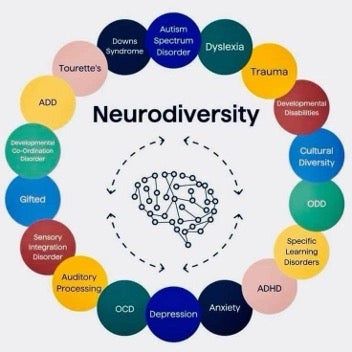
Imagine living as a neurodivergent in a community that is not sensitive towards disabilities. That has been my plight in Nigeria, a society that considers an individual who acts a little differently outside the norm as the “Other”. A country so densely populated that many individuals living with any type of non-physical disability would shy away from being correctly diagnosed for the fear of the stigma attached to this otherness. The stigma of being called derogatory names like “Ogbanje” or “Awgu”. A country whose inattentiveness to mental health issues has even made its only eight federal neuropsychiatric hospitals so invisible, that the dense population of over 200 million Nigerians is resorting to churches, mosques, and shrines for faith-based healing, instead of getting actual support from specialized medical practitioners and facilities.
Thankfully, we have the very supportive Rice Student Disability Resource Centre (SDRC) to offer resources that support the special needs of neurodivergent Rice students like me.
Generally, people are more empathetic to neurodivergent children than adults. This is not because the adults have outgrown them; instead, they have learned to mask them and accept people’s misconceived stereotypes about them. My sensitization on disabilities began in January last year when it started taking a toll on my academic performance. With the support of my department, SDRC, and my ever-supportive advisor, I gradually came to recognize the entire enigma. First, I understood Neurodivergent as a noun or adjective describing individuals whose mental or neurological functions differ from what is considered typical. Simply put, neurodivergent individuals are not neurotypical. Neurotypical people are supposed to be normal.
Before that revelation, I had heard of Autistic Spectrum Disorders, which is the most common disability back home in Nigeria, generally accepted as a disability on the spectrum because of the slightly visible motor coordination. However, there are other non-physical disabilities beyond Autism, which I have come to learn about.
They include, but are not limited to:
- Autism Spectrum Disorder: commonly known as autism, and formerly known as Asperger’s syndrome. It is a neurodevelopmental condition affecting social communication, interaction, and behaviour, with associated sensory sensitivities.
- Attention-Deficit Hyperactivity Disorder (ADHD): This is suddenly gaining attention, and it generally affects students’ academic performance. Persistent patterns of inattention, impulsivity, and hyperactivity characterize it.
- Dyslexia: The easiest way to explain it is difficulty with reading, spelling, and language processing.
- Dysgraphia: difficulty with writing, spelling, and organizing thoughts on paper.
- Dyscalculia: Difficulty in mathematical calculations
- Dyspraxia (Developmental Coordination Disorder - DCD): Difficulty with motor coordination affecting balance and movement.
- Obsessive-Compulsive Disorder (OCD): A condition that involves uncontrollable, recurring obsessive thoughts and compulsive behaviours.
- Sensory Processing Disorder (SPD): Here, the brain finds it difficult to receive and respond to sensory information.
- Down Syndrome: A Genetic disorder that causes developmental and intellectual delays.
- Anxiety Disorder: Little problems throw them aback, and they become so anxious that they avoid the public. The most common example is social anxiety.
- Tourette Syndrome: A neurological disorder characterized by involuntary, repetitive movements and tics (vocalizations).
- Synesthesia: They could taste colours instead of seeing them.
The thing about the Spectrum, as these different disabilities are commonly called, is that one person can be living with one or two or more of these disorders, as they overlap on the spectrum. And the same two people who have the same diagnosis may experience them differently overall and in different times and places. This is me still urging you to be kind to everyone. Just like our individual problems, no one wears their disabilities on their heads as crowns or on their chests as badges, except when they disclose it to you. Trust me, a lot of people would rather keep it to themselves than share it so that they will not be treated like the “other”. No one likes that.