
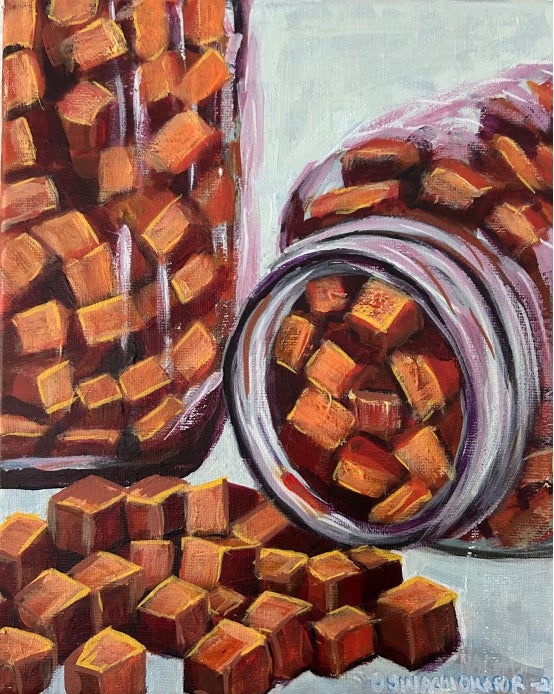
I cannot fathom how the name chin-chin came to be, but it is another onomatopoeia, like puff-puff, this time derived more from the sound this special West African pastry makes when crushed and masticated in the mouth. Nigerians call it Chin-chin, and I do not see myself calling it anything else. Every family in Nigeria makes them during the Christmas season, as it requires teamwork and helps form stronger bonds, with everyone participating in kneading, rolling out, or cutting it into pieces, or frying and eating them.
In fact, it makes for the perfect Christmas gift. I cannot remember a festive season without chin-chin. I make them for my friends on their birthdays and just on any other day! And when I do not feel the urge to make them, I purchase them from any of the African stores mentioned in Natalie Kokroko’s blog or even from Amazon.
In my first year at Rice, I was surprised when Dasol, one of my coursemates, returned from China and brought me lots of Chinese snacks. and chin-chin was surprisingly one of them! It was twisted, packaged, and the name was written in Chinese, which piqued my curiosity to research further if other countries have a similar snack like chin-chin. As usual, we all share similar foods, and chin-chin is certainly one of them. Here is what similar snacks are called in different countries:
- Ghana: Achomo or Party chips
- Togo & Benin Atchomon.
- Cameroun Croquette/chin-chin.
- Ethiopia Dabo kalo.
- India (Goa) Kulkul or Shakkar Para/ Shakarpara
- Nordic Countries (Sweden/Norway)- Klenät or Fattigmann. Often flavored with cardamom or brandy, it is diamond-shaped.
- Lithuania žagarėliai. This is covered in powdered sugar.
- Italy – Chiacchiere. This translates to chat or gossip.
- Latin America- Hojuelas or Sopapillas
- Burkina Faso- Burmasa
- USA: Pie crust cookies/scraps
- France: Bugnes or Merveilles. Angel-wings fried pastries made for carnival seasons.
- Tibet & Nepal: Khapse or Khabsey. Popular snacks for Tibetan New Year (Losar)
- China: Máhuā, also known as fried dough twist. The dough is twisted into a braided rope before being deep-fried. This is exactly what Dasol got me that spurred my interest in the foods that bind us.
Chin-chin can be baked or fried; however, the most authentic version is the fried one. Here is a simple, basic recipe to create and savor this sumptuous goodness!
Ingredients
- 3 cups (360 g) of All-Purpose Flour or Bread Flour
- 7 Tablespoon (100g) butter/margarine
- Half a cup (114g) of Sugar
- 1 cup and 2 tablespoons (90 ml) of cold water/milk
- Half a Teaspoon (4g) of Salt
- A teaspoon of baking powder (optional)
- 1 large egg (optional)
- Quatre cups of powdered Milk
- Half A teaspoon of nutmeg
- Vanilla essence/flavor (optional)
- Orange zest (optional)
- Oil for deep frying
Directions
- Combine sifted flour with all dry ingredients: salt, nutmeg, orange zest, and baking powder.
- Incorporate the margarine/butter into the bowl till it disappears into the mix and forms fine crumbs.
- Dissolve the sugar in water/milk in another bowl to break up any lumps.
- Beat the egg if you are using it, then add it to the sugar solution.
- Gradually pour the wet mixture into the dry mixture, mixing until a dough forms.
- Transfer to a floured flat surface and knead the dough till your fingers come out clean. Avoid overmixing.
- Set it aside in a cool place for 10 to 15 minutes to set.
- Cut the dough into pieces and roll out in batches using a rolling pin.
- Cut to your desired shapes using a knife or a pizza cutter.
- Heat the oil till very hot for deep frying.
- Fry in batches, but avoid overcrowding the frying pan.
- Stir the pastry for 2-3 minutes, until golden brown.
- Drain excess oil from the chin-chin with a colander lined with sufficient paper towels.
- Allow to cool properly before storing away in air-tight containers.
- Enjoy with a chilled drink like zobo or mango lassi.
- For a detailed video on how to make these sumptuous snacks, check out Kikifoodies on YouTube.
My memory fails me each time I try to recall how I acquired a sweet tooth for chin-chin, but it has been a part of my life since childhood. We take this finger food to school as snacks; it is served at parties, and my mum buys it whenever she returns from work at the end of each day. I ended up selling them at school to earn income. Chin-chin has been part of my adult journey and learning that other cultures have similar pastries makes me so happy.
Have you eaten the Nigerian chin-chin before or something similar in your country? If yes, what do you call it in your country?