
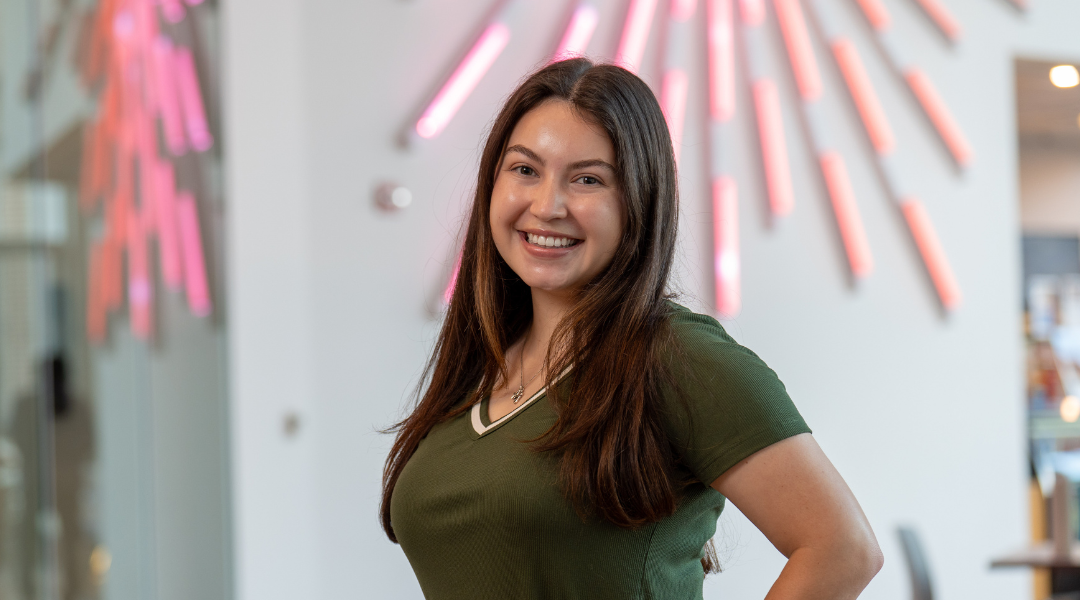
For 10 days this summer, Rice bioengineering Ph.D. student Amanda Galloway didn't see the sun.
Instead, Galloway lived underground in a retired nuclear missile silo in Arkansas, ate rehydrated food, followed a 24-hour-and-40-minute Martian clock and communicated with mission control through a simulated 40-minute round-trip delay.
It was all part of Southeast Analog's first analog astronaut mission — a simulation designed to give students the experience of living and conducting research like astronauts on a mission to Mars.
The experience might seem far removed from Galloway's daily work as a second-year bioengineering Ph.D. student at Rice's Richards-Kortum Optical Spectroscopy and Imaging Laboratory. Still, she sees a growing connection between the two.
Galloway's interest in space began as an undergraduate at Texas A&M University, where she was named an Astronaut Scholar by the Astronaut Scholarship Foundation. Through the organization, she began exploring how her background in bioengineering could contribute to aerospace and, more specifically, space medicine.
"If you're sending humans somewhere, there's going to be bioengineering involved," Galloway said.
At Rice, Galloway is interested in engineering for low-resource settings. She sees similarities between developing technology for those environments and designing systems that support humans far from Earth, where equipment, supplies, and maintenance opportunities are limited.
"I think what I've really been trying to do now is take the lessons I've learned here at Rice — so doing engineering for low resource settings — and applying that to space medicine," she said. "A lot of the concepts are the same."
Simulating life on Mars
Galloway discovered Southeast Analog through connections she made as an Astronaut Scholar. The student-led organization, based at Georgia Tech but open to students from across the country, launched its first analog astronaut mission this year.
The mission placed Galloway and five other crew members underground for 10 days. In addition to following a Martian schedule and eating rehydrated food, the crew followed an exercise regimen designed around conditions astronauts could encounter on Mars and conducted research projects submitted by universities across the United States and as far away as Bolivia.
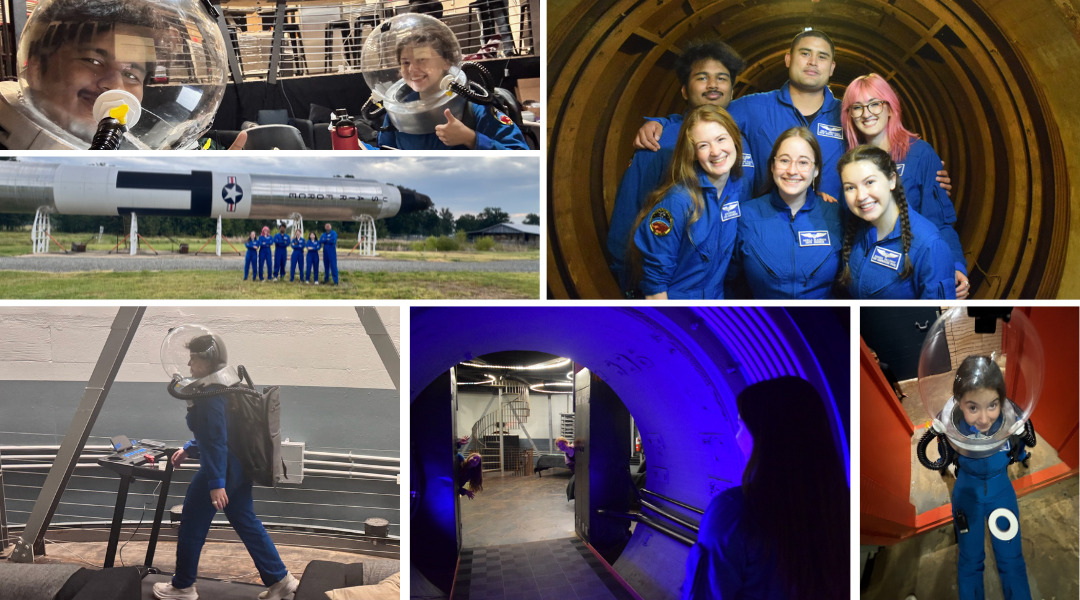
Projects included operating rovers and completing psychological testing designed to examine how the human brain responds to an isolated environment.
Even communication was designed to simulate the challenges of Mars.
Mission control was based at Georgia Tech, but messages from the crew were delayed 20 minutes before reaching mission control. Responses were delayed another 20 minutes on their way back.
Galloway said navigating that 40-minute round trip was more difficult than she anticipated.
"That's a hard thing to navigate, and especially if you're in a very stressful situation," she said. "One of the things that was harder for me than anticipated was deciding when something needs to be done in the mission right now, or when we do have the time to consult mission control and wait for that 40 minutes."
The experience followed about six months of preparation informed by NASA research. Training included decision-making under stress, teamwork, physical conditioning, swimming and scuba diving, communication exercises and flight simulations. Crew members even had an opportunity to fly a plane with trained pilots at Georgia Tech.
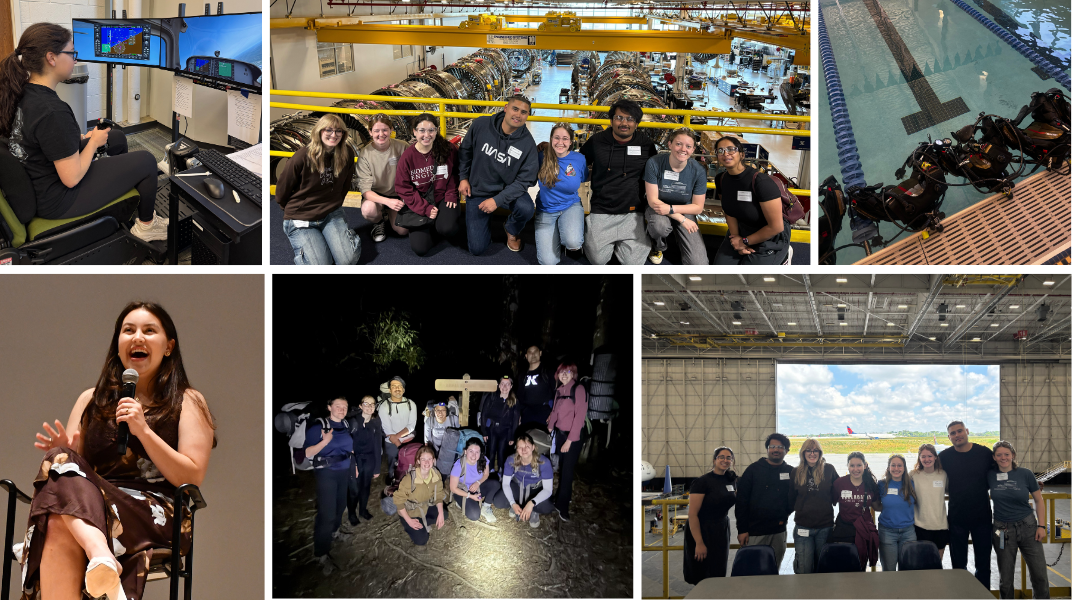
Once underground, some problems were simulated intentionally to test the crew's response. Others were real. Spacesuits broke, equipment needed attention, and the crew had to manage resources such as food carefully.
The isolation presented another challenge. Galloway went without her phone and outside communication with friends and family for the duration of the mission.
"It was obviously very hard physically and mentally," she said. "It's hard not to talk to anyone except for the five other people that I was underground with."
But Galloway also described the experience as fun and an opportunity to discover what the crew could accomplish together.
"I think it just really taught us so much about ourselves, of how much we're able to endure and how much more we're capable of than we thought," she said.
Connecting Rice research with space medicine
Galloway's experience working in low-resource health care settings in Mozambique and Brazil helped prepare her to conduct research with limited resources during the mission.
Now she hopes the connection can work in the other direction.
For future analog missions, Galloway wants to submit research developed through her Ph.D. work at Rice. One possibility would be a usability study examining how people interact with technology she develops in an isolated, resource-constrained environment.
Her goal is to understand better how technologies designed for global health could translate to space medicine — and what lessons from space medicine could inform work in low-resource settings on Earth.
"I can help connect the opportunities I am doing here at Rice, and the research I'm doing here with the field that I eventually want to go into after graduation," Galloway said.
She continues her involvement with Southeast Analog as a risk management officer, working to align the organization with international standards for analog missions. She also plans to share her experience at Space Center Houston on September 26th.
For Galloway, the experience represents a graduate school path she couldn't have predicted when she began her Ph.D.
"This is, like, not what I thought I would be doing in grad school," she said, "but I'm so thankful for the opportunity."