
For many graduate students, healthy eating can be difficult to balance with research, coursework, teaching responsibilities and the realities of a tight budget.
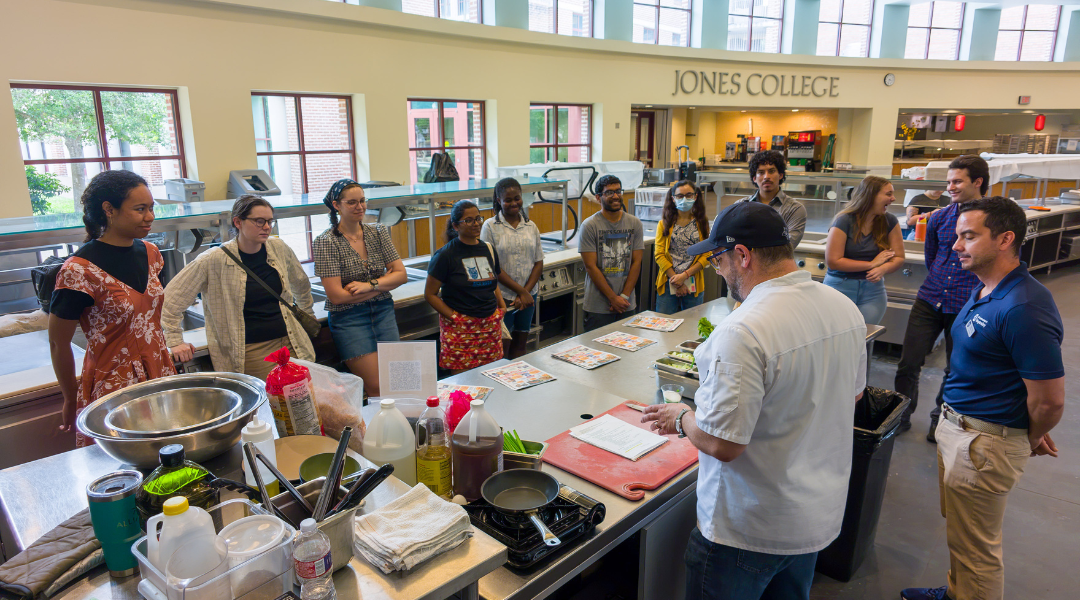
A recent hands-on cooking session hosted by Rice Housing and Dining aimed to make that balance easier. Held at North Servery, the event brought graduate students together to learn practical strategies for meal planning, grocery shopping, batch cooking and building healthy meals at home.
The session was organized by Daniel Nossa, who oversees operations at Rice University’s dining facilities, and led by Chef Joe Stayshich, assistant dining director for residential operations, with support from Clare Rezentes, registered dietitian for Rice Housing and Dining. Together, they focused on helping students think about food not just as something to grab between obligations, but as an important part of graduate student wellness.
For graduate students, time limits can be significant. Many are no longer on undergraduate-style meal plans, and some are cooking for themselves regularly for the first time. Others are navigating new grocery stores, different food cultures, dietary needs or limited access to transportation.
Rezentes said graduate students at Rice represent a wide range of backgrounds, including many international students who may be adjusting to food systems in the United States while also managing academic demands.
Many Rice graduate students, especially our international population, struggle to adjust to eating in the U.S.,” Rezentes explained. “Between tight budgets, demanding schedules and active campus involvement, balancing time constraints with healthy, culturally appropriate and goal-aligned nutrition is a major challenge.
During the session, Stayshich walked students through simple strategies for grocery shopping and meal preparation. One key idea was the “perimeter rule” of grocery shopping: focusing on fresh produce, proteins and dairy items typically found around the outside edges of the store, while using the center aisles for pantry staples.
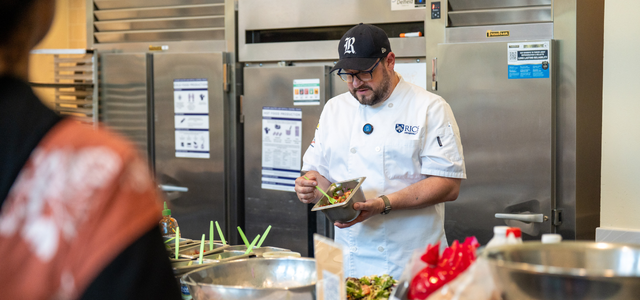
Stayshich encouraged students to build meals around three main categories: fresh foods, proteins and staples. Those staples can include basics such as salt, pepper, olive oil, vinegar, rice, beans, lemons, hot sauce and other ingredients that make it easier to cook at home.
“Have those staples: your salt, your pepper, your olive oil, your vinegars and all that sort of stuff, your rice and your beans, and you’ll never go hungry,” Stayshich said. “All you need to add at that point is some vegetables, some proteins, and you have a winning meal.”
The class also emphasized batch cooking as a way to save time during the week. Stayshich demonstrated how one cooked protein, such as chicken, can be prepared in different ways — sliced, diced or shredded — and used across multiple meals. He also showed students how to build vegetable-forward tostadas, make a simple vinaigrette and use prepared ingredients throughout the week.
Nossa said Rice Dining events like this one are designed to support students beyond the servery line by giving them practical tools they can use in their daily routines. At North Servery, he said his role includes helping ensure that students have a positive dining experience and that the operation runs smoothly, covering cleanliness and service, as well as the quality of the food.
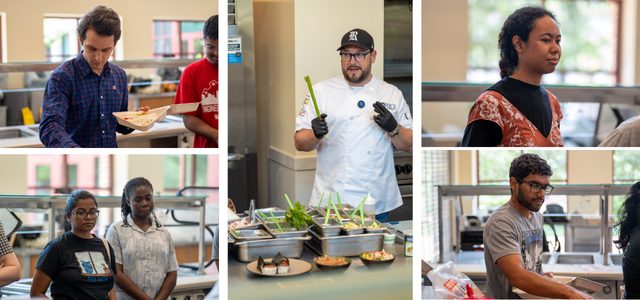
For Chima Adiole, a third-year Ph.D. student in computer science, cooking became a major adjustment after undergraduate life.
“During my undergrad I was on the meal plan all four years, so I didn’t have to cook,” Adiole said. “Food was ready for me every day. And then, first year of grad school, I had to figure out how to cook from scratch.”
Adiole said planning ahead has made the biggest difference. He grocery shops once a week, builds a menu before going to the store and prepares food in batches on the weekend. When he cooks more than he can eat in a few days, he freezes meals in portions.
“I spend the weekend cooking, and I freeze my food a lot,” Adiole said. “On the day that I want to eat them, I just put them in the microwave.”
Other students said meal planning is not just about eating better. It also helps reduce stress after long days on campus.
“For me, meal prepping was a necessity,” said Caroline Spindel, a third-year graduate student in electrical engineering. “Just coming home and the idea of making dinner from scratch, or even worse going to the grocery store, coming home and having it already portioned and packaged and made really changed my lifestyle.”
Mikayla Deehring, also a third-year graduate student in electrical engineering, said she attended the event to learn new meal prep ideas, especially recipes that keep well throughout the week.
“I also try to meal prep, but I feel like I’m bad at it,” Deehring said. “I wanted to come and get some tips because I feel like a lot of stuff I make doesn’t keep well.”
The session also included practical food safety guidance. Stayshich reminded students to pay attention to time and temperature when thawing, cooking and storing food. Cold foods should remain under 40 degrees, and hot foods should stay over 140 degrees to reduce the risk of bacterial growth.
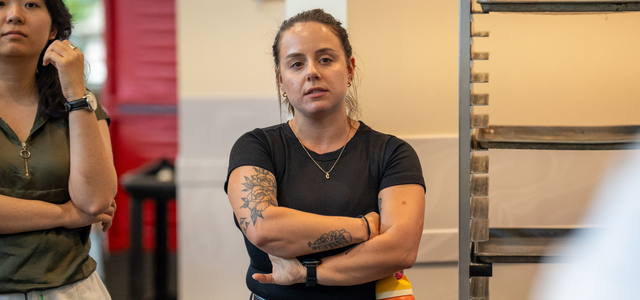
Rezentes said small habits can help graduate students make healthier choices, including planning meals before getting hungry, setting aside time for grocery shopping, using campus resources and being mindful of how often they rely on delivery services.
“If you wait until you’re hungry, or you wait until the very last minute to decide what you’re going to eat, you’re probably going to get fast food or you’re going to order DoorDash,” Rezentes said.
She also encouraged students to take advantage of Rice resources, including campus dining options, meal plans, the campus food pantry and one-on-one support through her office.
For students new to cooking, Adiole offered simple advice: experiment, learn from others and give yourself time to improve.
“It was a rough start, but I think we’ve come a long way,” Adiole said. “Now I am good enough to a point where I can host friends and cook for them, so I think we’re making progress here.”
The overall message for graduate students was straightforward: Healthy eating does not have to be complicated or expensive. With a little planning, a few staple ingredients and a willingness to cook in batches, students can build meals that support both their schedules and their well-being.