
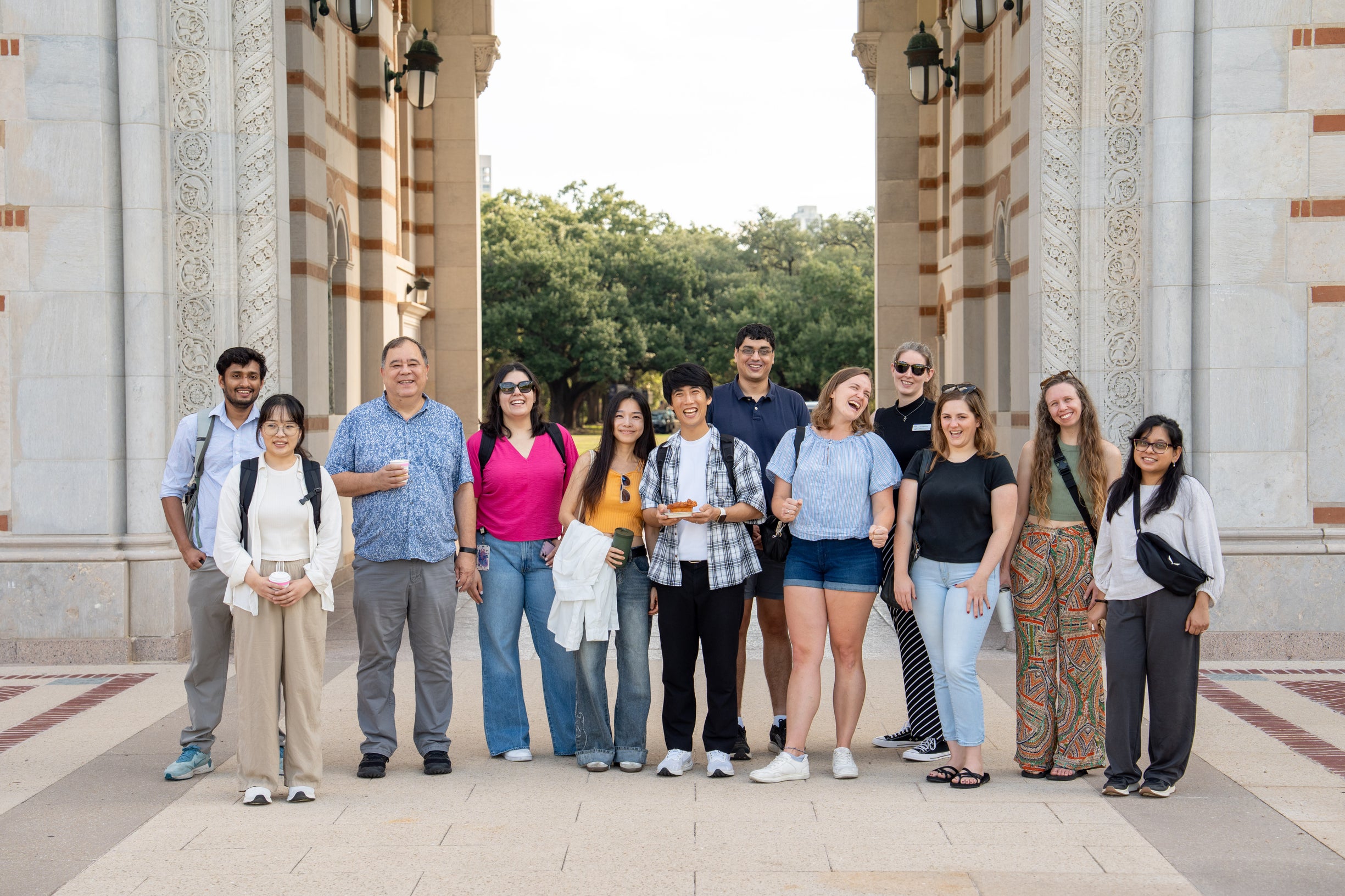
Years before Kelly Brice arrived at Rice University as a postdoctoral researcher, it was already part of her story.
“Rice was actually the first school I ever looked at for colleges as a prospective undergraduate student,” Brice said.
Her academic path eventually led her into the neuroscience side of psychology, where postdoctoral training is often an important step after earning a doctorate. When a Rice position connected to her background in health and dementia research appeared, she knew she wanted to apply.
“I was fortunate enough to get the position,” Brice said.
Brice is one of the postdoctoral scholars whose work and experiences were highlighted during Rice’s Postdoc Appreciation Week. Through research, mentorship and collaboration, postdocs occupy a distinctive place in the university community: They have completed their doctorates but are continuing to develop the skills, networks and independence needed for the next stage of their careers.
“In graduate school, you learn how to do science, and then as a postdoc is where you learn how to be a scientist,” said Sanjay Chepuri, a postdoctoral research fellow who studies Earth’s magnetosphere and its interaction with the sun.
Chepuri said that transition includes learning how to begin collaborations, expand a professional network and pursue funding. It can also mean moving beyond the narrow research focus of a dissertation and building broader expertise.
At Rice, postdoctoral researchers are pursuing work that reaches from space physics and quantum materials to childhood cancer, sustainable materials and creative writing.
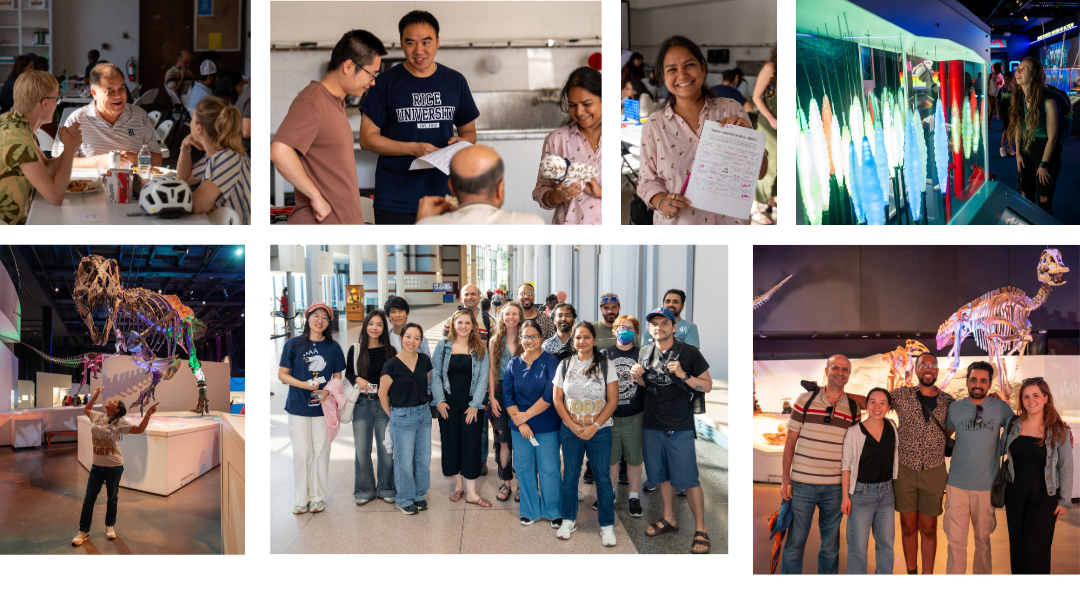
Abbie Clevenger, a postdoc in the Department of Bioengineering, studies Ewing sarcoma, a rare pediatric cancer. Supported by the St. Jude-Damon Runyon Pediatric Cancer Research Fellowship, she examines protein expression in individual cells and visits St. Jude Children’s Research Hospital in Memphis, Tennessee, where she can see how laboratory research may eventually reach patients.
“We’re learning new things, but also getting to bring our expertise to the labs that we join as postdocs,” Clevenger said. “We get to kind of help mentor those graduate students that are currently here. But we also do get to learn from them too.”
Rice’s location across from the Texas Medical Center was a major draw for Clevenger. It gives biomedical engineers access to clinicians, patient samples and potential collaborators while allowing postdocs to pursue increasingly independent questions.
That freedom also extends beyond laboratory research. Stone Mims, a post-MFA fellow in creative writing with Rice’s Humanities Research Center, contributes to the Sawyer Seminar, a series examining and complicating racial narratives at Rice from the university’s founding through the present. Mims is also developing a novel influenced by speculative literature and Afrofuturism.
“Rice has felt entirely freeing,” Mims said. “I think there’s a lot of trust that the institution and the people who work here have in us to sort of do what we need to do. They trust us as experts in our field.”
For Mims, working alongside scholars in history, medical humanities and other disciplines has brought perspectives to his writing that he would not necessarily encounter in a traditional creative writing workshop.
Shaharyar Wani came to Rice to expand his expertise in materials science. In the lab of chemist James Tour, Wani works on more efficient ways to process two-dimensional materials and recover metals from batteries and electronic waste, contributing to a more circular materials economy.
“When I was thinking about the postdoc, I was thinking of a place where I can learn new skills, meet the right people who can facilitate that transition, and Rice turned out to be that place,” Wani said.
Although he had been at Rice only a short time when he was interviewed, Wani said he had already connected with other postdocs and found people with whom he could exchange ideas both professionally and socially.
“It already feels like home,” he said.
For many postdocs, finding that sense of belonging requires intention. Unlike graduate students, postdocs may arrive throughout the year, work alone or be the only postdoctoral researcher in a group. Chepuri said the experience can become isolating without opportunities to connect.
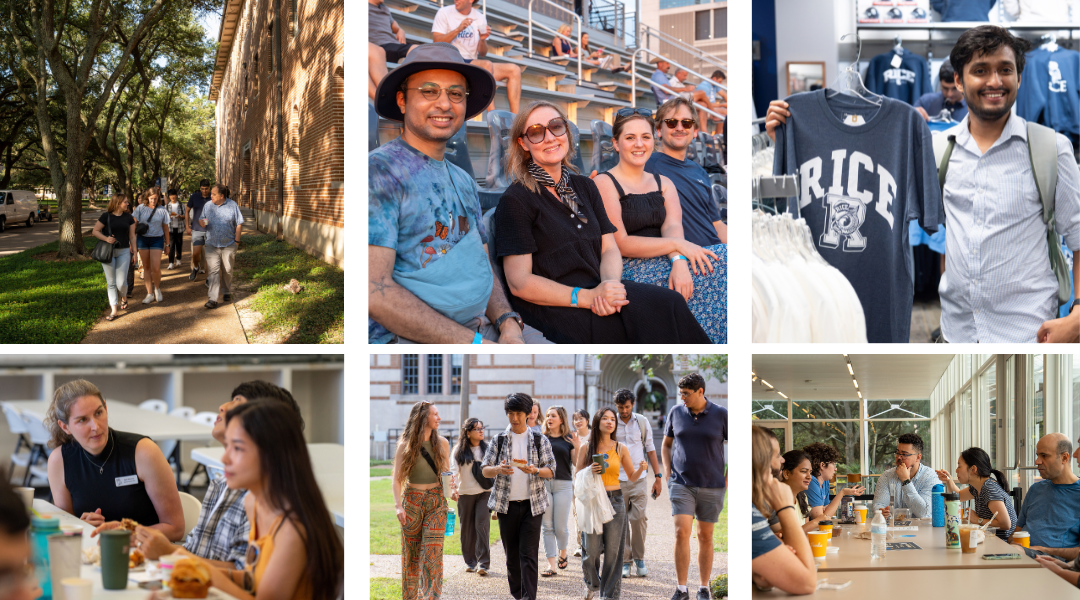
The Rice University Postdoctoral Association helps address that challenge through lunches, coffee gatherings, social events and other programs that bring together postdocs from across campus. Clevenger, a co-president of the association, said those interactions have enriched her experience at Rice.
“We don’t all do the same thing,” Clevenger said. “Getting to hear other experiences has been a really fun aspect of being involved in the Rice Postdoc Association.”
Recognition matters, too. Jounghoon Hyun, a physics postdoc studying quantum materials, said postdocs occupy an in-between stage as they prepare for careers in academia or industry. Being recognized as members of both the university and their research groups can provide renewed energy for their work.
“It is a really good opportunity and really motivating for us to have some more energy to go on in the research,” Hyun said.
That combination of advanced research, professional growth and community defines the postdoctoral experience at Rice. Chepuri offered a simple reminder for making the most of it: Leave the lab occasionally, walk across campus and connect with the people around you.
“Get out there and be a person in addition to being a researcher,” he said.