
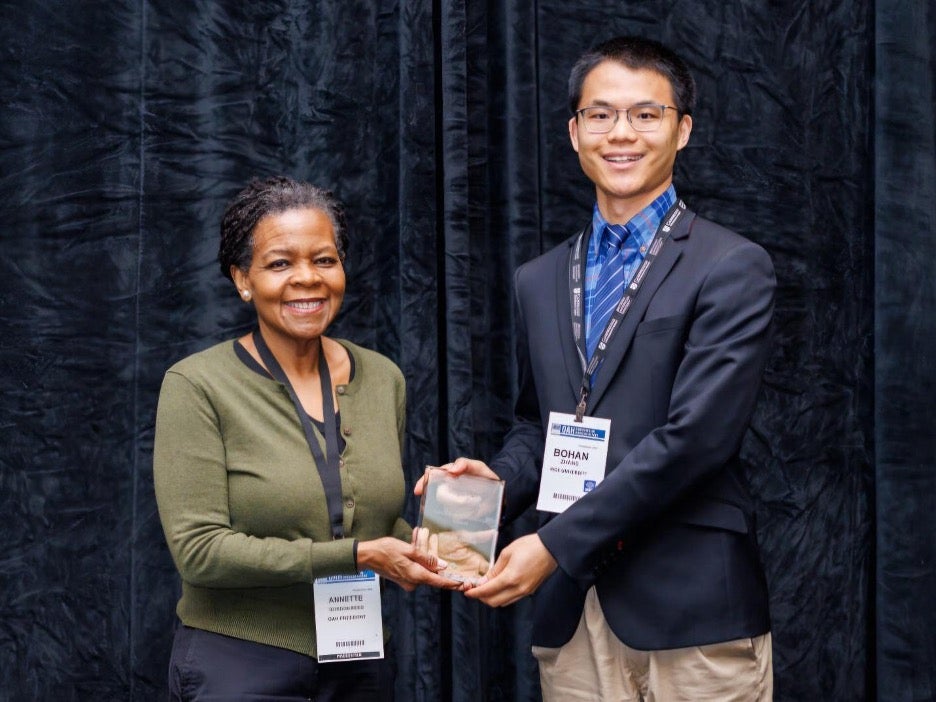
In February 2026, I was honored to learn that my article on East Asian–African American interactions had received the Louis Pelzer Memorial Award, presented annually by the Organization of American Historians (OAH) for the best unpublished essay in U.S. history written by a graduate student. As the largest professional organization of American historians, the OAH represents one of the highest standards in the discipline. Receiving this award was an unexpected and deeply encouraging milestone in my academic journey. As part of the award, I was invited to attend the ceremony during the OAH Annual Conference in Philadelphia in April. Even more excitingly, the award-winning essay will be published in the Journal of American History, the leading journal in the field of U.S. history.
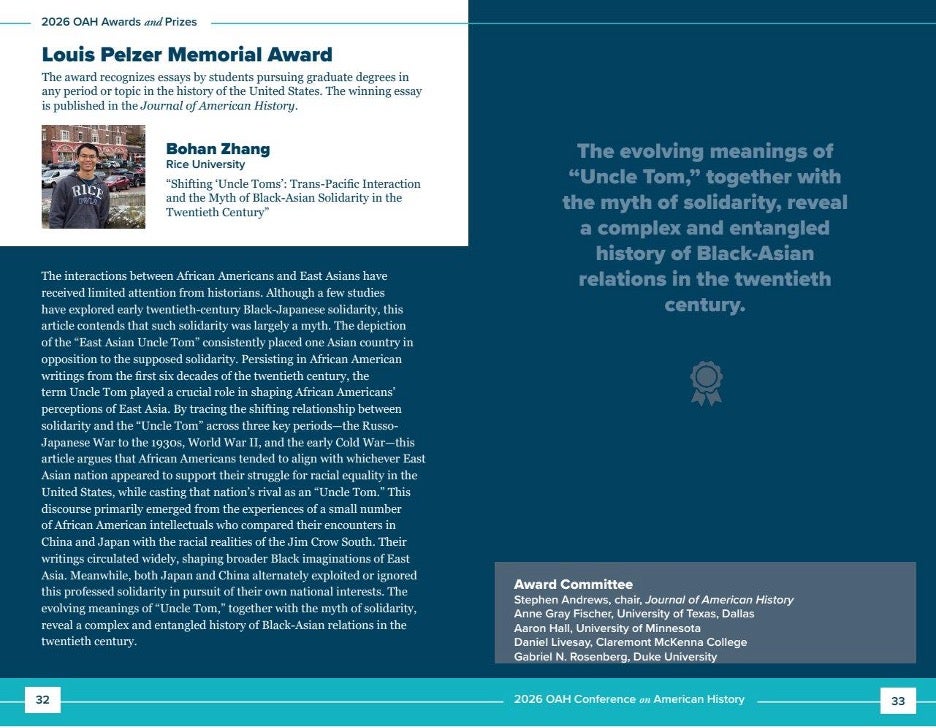
Thanks to generous funding from Rice University’s Department of History, I was able not only to attend the conference, but also to extend my stay in Philadelphia for archival research at Swarthmore College.
1. Archival Research at Swarthmore College
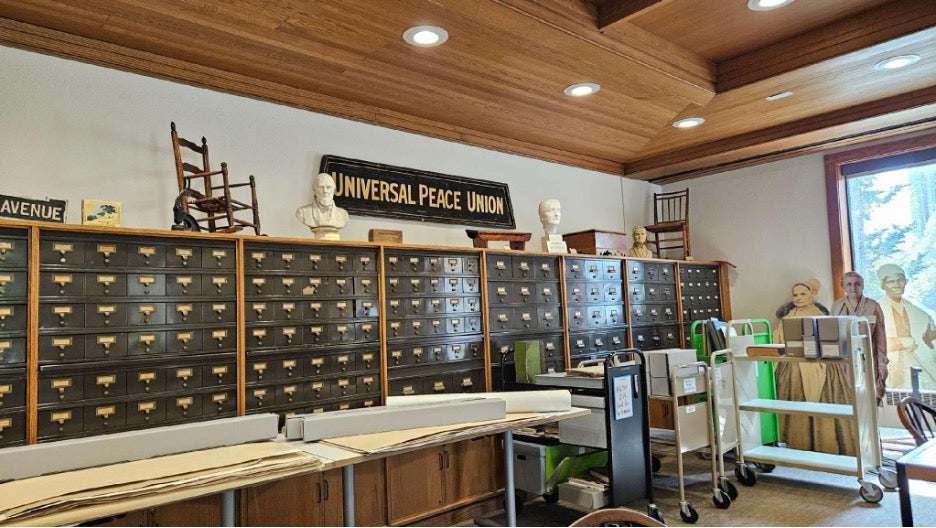
I arrived in Philadelphia two days before the conference began and spent a full day conducting research at the Swarthmore College Peace Collection. Since my dissertation examines Pan-Pacific internationalism in twentieth-century Hawaiʻi, the Peace Collection holds several valuable collections related to peace activism, international organizations, and transnational exchanges that are directly relevant to my project.
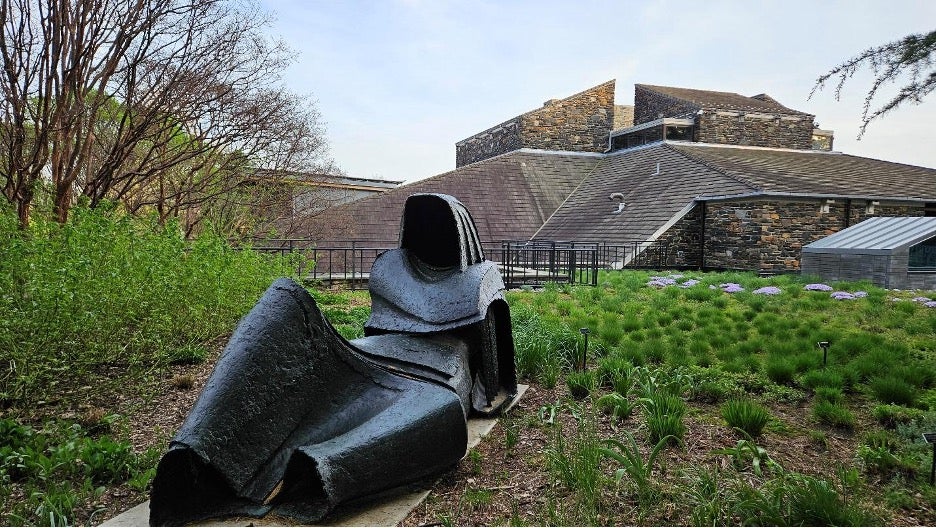
For both lunch and dinner, I ate at the college dining hall. The buffet was delicious, although I have to admit it was not quite as diverse as the serveries at Rice! After each meal, I took a leisurely walk around campus. Swarthmore’s arboretum-like grounds, lined with trees and quiet pathways, provided a peaceful environment that contrasted nicely with the busy conference days that would soon follow.
2. Attending Panels at the OAH Annual Meeting
As the largest annual conference in the field of U.S. history, the OAH meeting brings together hundreds of historians from around the world. With panels covering nearly every aspect of American history, it offers an excellent opportunity to learn about new scholarship and emerging debates.
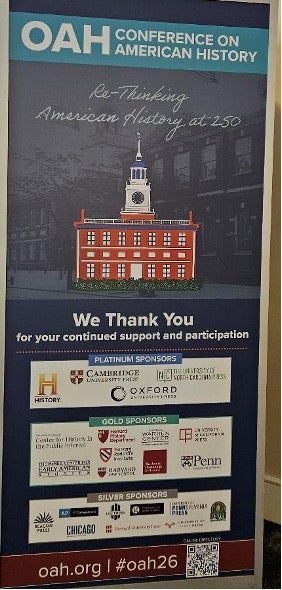
Given my research interests, I attended panels on Hawaiʻi, immigration, empire, race, and African American history. It was fascinating to see how scholars approached similar questions from different methodological and geographical perspectives, and many of the discussions offered me new ideas for my own dissertation.
One particularly rewarding experience was participating in the OAH’s “Hey, I Know Your Work!” mentoring program. I was paired with a senior historian who generously spent an hour discussing my research, the academic job market, publishing strategies, and professional development. As a graduate student preparing for the next stage of my career, I found the conversation both practical and encouraging.
Another highlight was the conference book exhibit. Walking through booths from university presses, I discovered many newly published books relevant to my research. For a historian, browsing new titles and speaking with editors is almost as exciting as attending the panels themselves.
3. The Award Ceremony
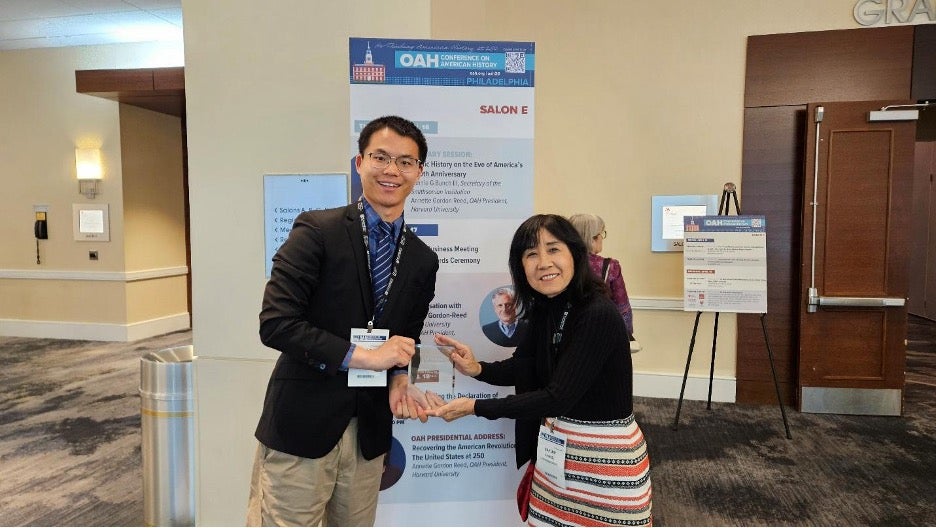
The highlight of my week came on Friday evening at the OAH Awards Ceremony. Seated among the other award recipients—many of whom were senior professors receiving recognition for their books—I felt both nervous and honored. When my name was announced, I walked onto the stage and received my award plaque from the OAH President Annette Gordon-Reed.
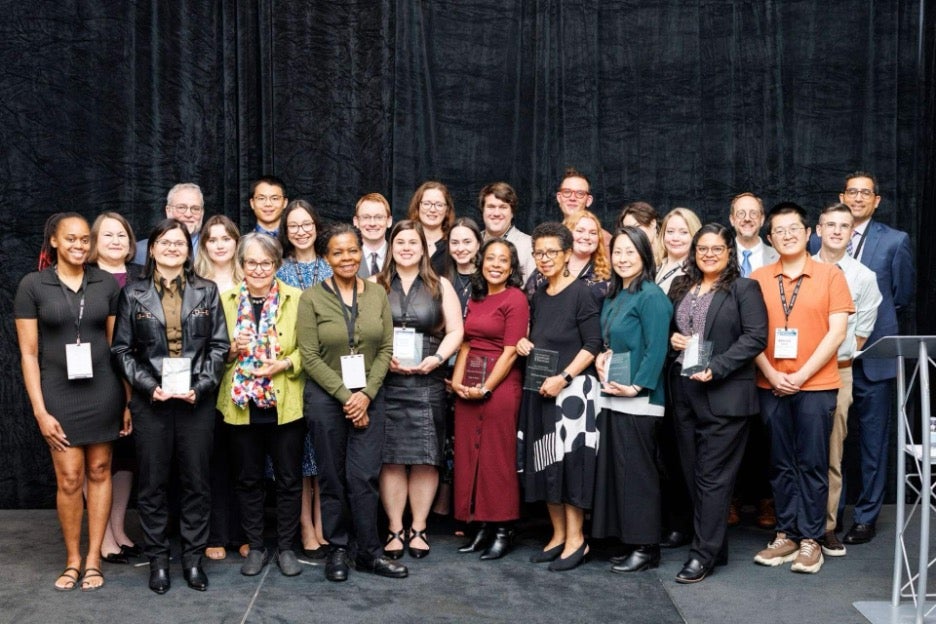
As we paused for the official photograph, I looked toward the audience and saw my advisor, Professor Sayuri Guthrie-Shimizu, smiling proudly. That moment meant more to me than I can express. Graduate research is often a long and lonely process, filled with uncertainty and revisions. Receiving this recognition reminded me that the countless hours spent in archives, libraries, and at my computer are worthwhile. It is an encouragement that I will carry with me as I continue my research.
4. Exploring the City of Brotherly Love
Between conference sessions, I took the opportunity to explore the “City of Brotherly Love.” Philadelphia occupies a unique place in American history: it was here that the Declaration of Independence and the U.S. Constitution were debated and adopted, making the city a fitting setting for a conference of American historians.
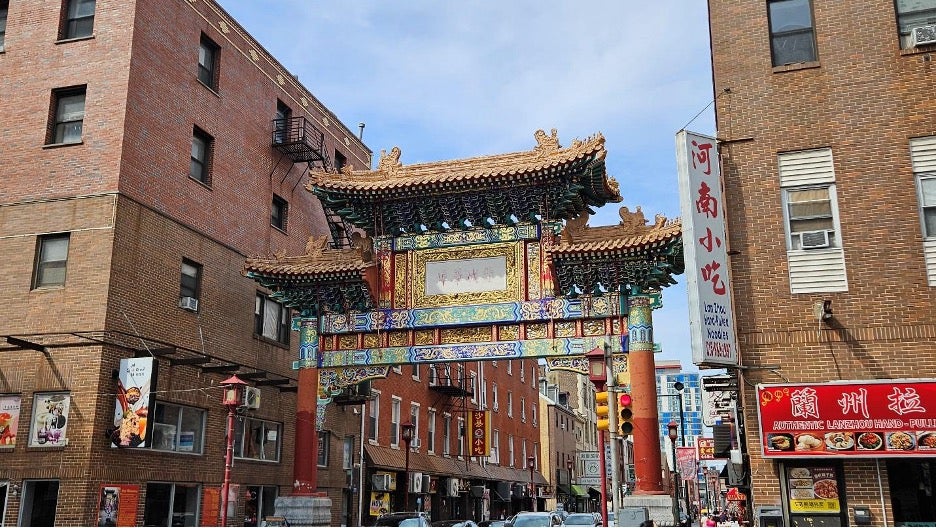
I wandered through Chinatown, which felt both familiar and distinct. Like many Chinatowns in North America, it preserves Chinese cultural traditions while reflecting the unique history of Chinese immigration to the United States.
From there, I walked to Independence National Historical Park, where I saw the Liberty Bell for the second time. My first visit was fourteen years earlier, when I traveled to Philadelphia as a high school student with my mother and grandmother. Returning now as a Ph.D. candidate in American history, the experience felt entirely different. Although Independence Hall was closed during my visit, simply standing outside the building where the nation’s founders debated independence and constitutional government was a memorable experience. It also gave me a reason to return in the future.
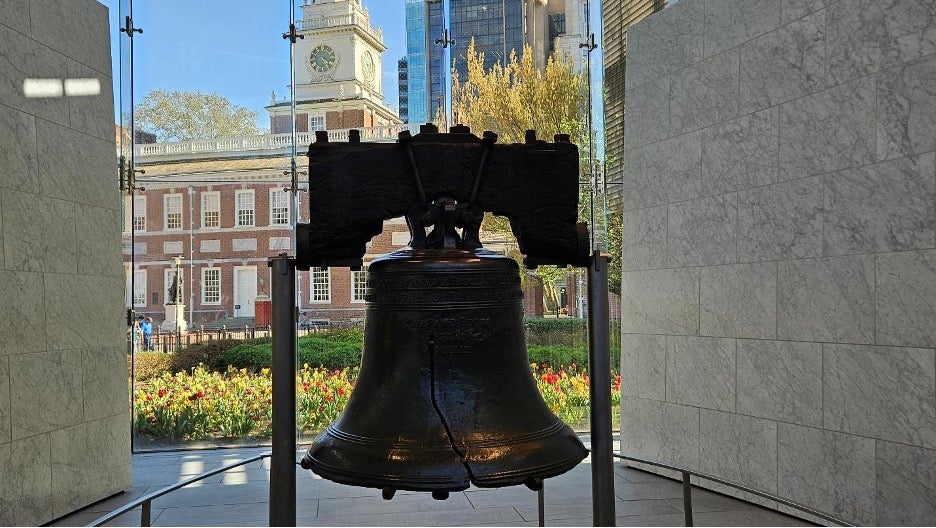
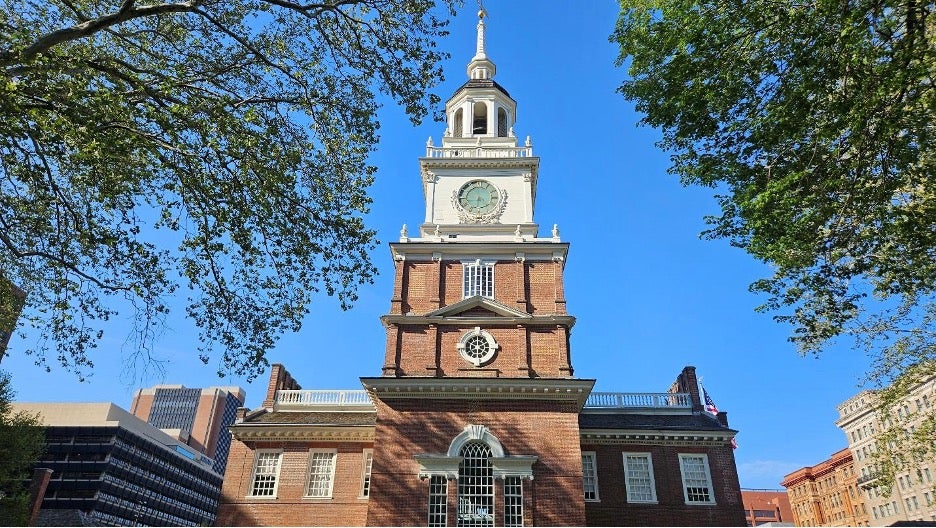
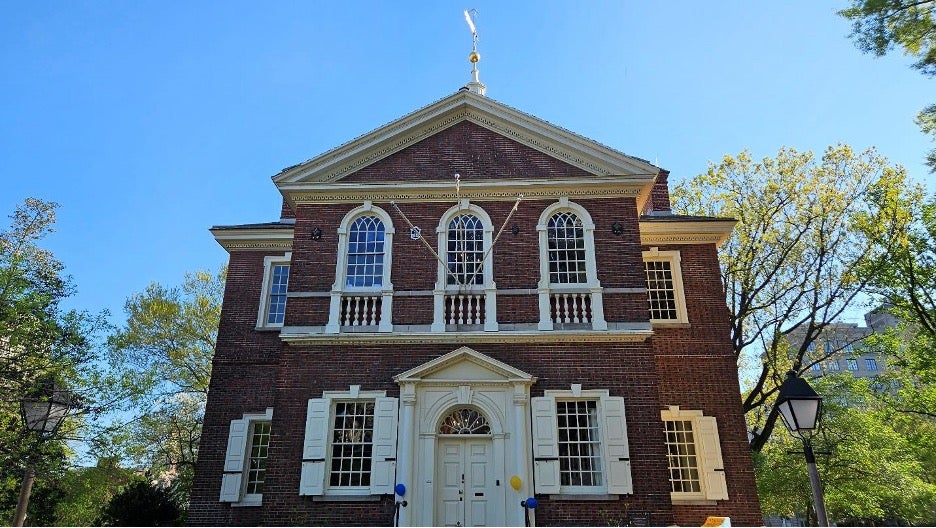
Continuing eastward, I strolled toward the Delaware River, passing Carpenters’ Hall and several other historic buildings that witnessed the political and commercial life of colonial Philadelphia. Walking through these streets felt like moving through layers of U.S. history.
5. Exploring Historic Battlefields
After the conference concluded, I rented a car for a weekend trip to two sites that shaped the course of American history in very different ways: Gettysburg and Valley Forge.
Gettysburg National Military Park offers an excellent self-guided driving tour that leads visitors across the battlefield. Along the route stand countless monuments commemorating soldiers from both the Union and Confederate armies. From the observation tower, I could take in the entire battlefield. It was much smaller than I had imagined, and the peaceful rolling hills, covered in fresh spring greenery, made it difficult to believe that one of the bloodiest battles in American history had taken place there.
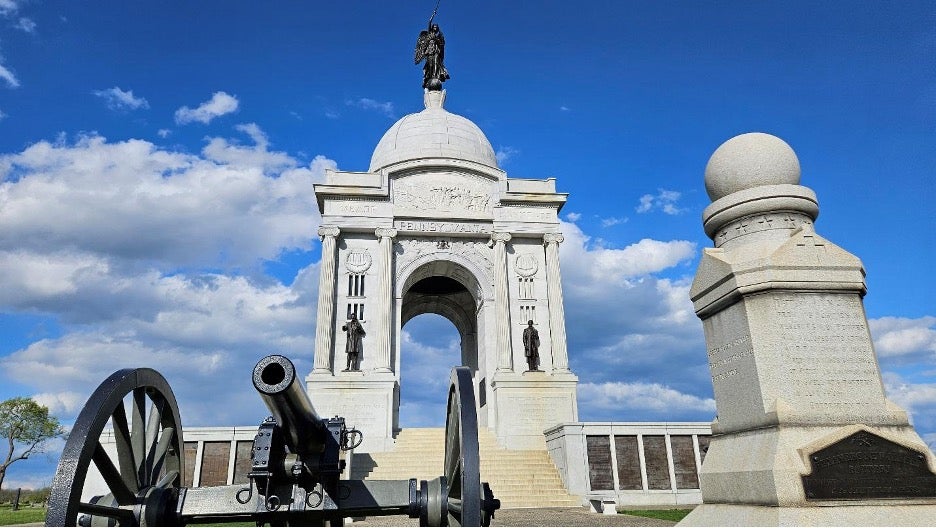
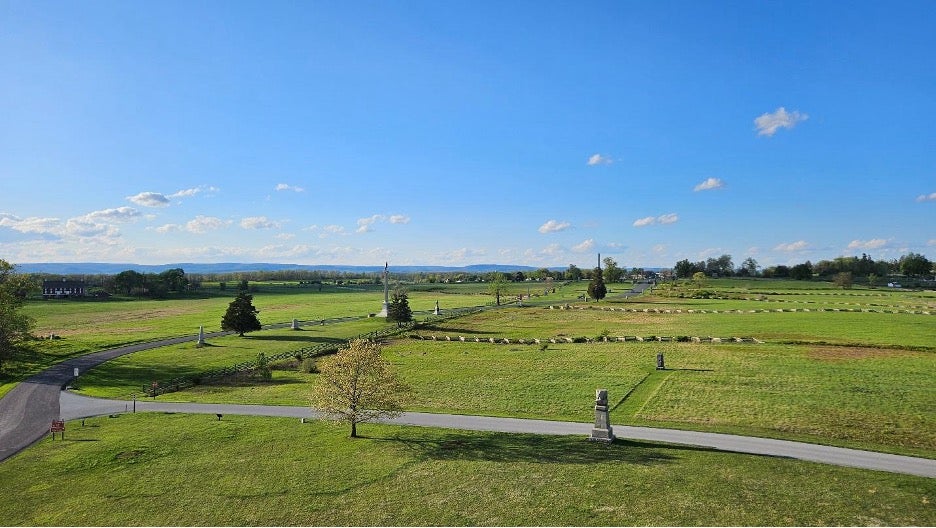
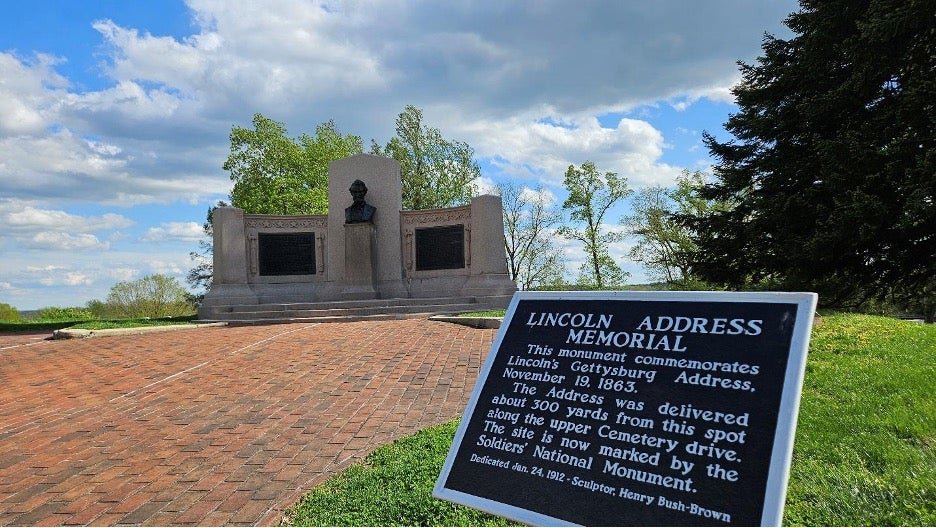
Standing at Soldiers’ National Cemetery, where President Abraham Lincoln delivered the Gettysburg Address in 1863, I realized that it was one thing to study these events in books; it was quite another to stand in the place where history unfolded.
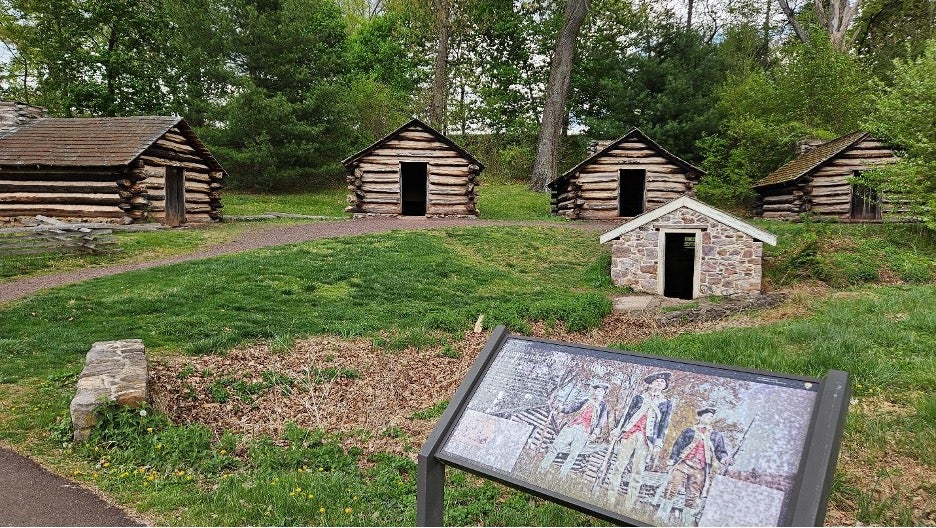
The following morning, I visited Valley Forge National Historical Park, where George Washington and the Continental Army endured the harsh winter of 1777–1778 during the American Revolutionary War. Although the soldiers suffered from cold, hunger, and disease, the encampment became a turning point in transforming the Continental Army into a more disciplined fighting force.
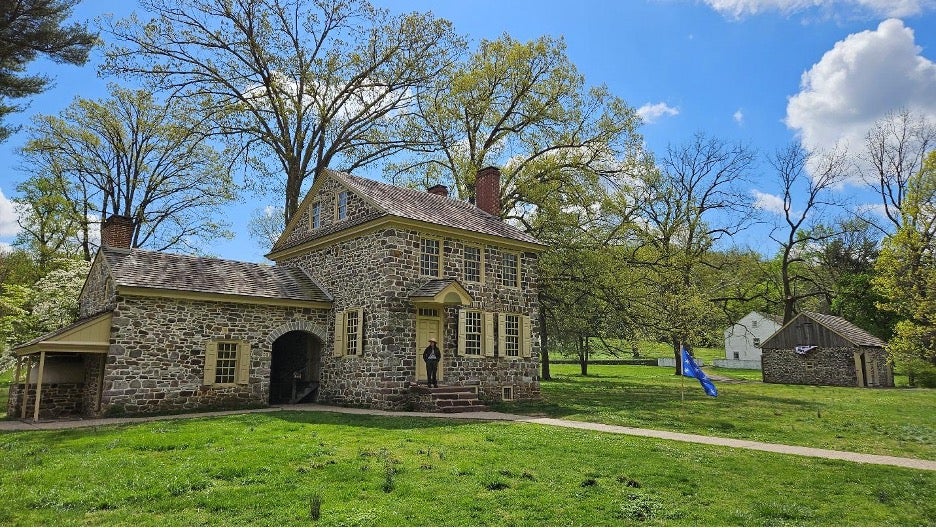
I visited Washington’s Headquarters and several soldiers’ cabins scattered throughout the park. The visit reminded me that the founding of the United States was not only the work of famous statesmen but also of thousands of individuals whose sacrifices made independence possible.
Conclusion
Attending the 2026 OAH Annual Conference and receiving the Louis Pelzer Memorial Award were among the most memorable experiences of my graduate career. In a city where the United States was founded, and during the nation’s 250th anniversary, it was especially meaningful to celebrate an achievement in the study of American history.
Over the course of one week, I presented my research to the profession, learned from outstanding historians, conducted archival research that advanced my dissertation, and visited some of the most significant historic sites in the United States. The trip reminded me of why I chose to become a historian in the first place: to better understand the past and to contribute, in my own small way, to the ongoing conversation about history.
I returned to Rice feeling inspired, grateful, and fully recharged for the next stage of my dissertation research.