
I was told that America is always extremely cold, and that the airplane would be freezing by mortuary standards, so I wore jackets, layer by layer, to prevent freezing on the plane. “Like, no one back home in Nigeria thought of the four seasons?” I wondered. I was also told that it was more important to pack foodstuffs as compared to clothes, which led to my decision of filling up my two large travelling boxes with the supposedly expensive African foodstuffs, as though I would never run out of them and have the need to restock until a friend or relative miraculously visits America with the food items I may need! After all, there may be no African markets there, as my relatives, who have little to no experience with Western travel, had advised. Or even if there were African markets, they would be so expensive! All speculations! No facts!
“But what about clothes?” I had queried. They replied that the Oyibos make them. They will have a lot of them, and they will be cheaper than food items. After all, we import luxurious garments from the United States and Turkey. Oyibo is what we call Europeans and Americans. In fact, anyone with white skin. To ensure sufficient space for my foodstuffs, I literally wore my heaviest African clothes, stuffed my tiny carry-on with my remaining clothes, and made my way to the airport with the full assurance that all my relatives had told me about America was true. I was so stuffed that it looked like I was headed for Mars. I was in a complete Afronaut attire! Little wonder I was stopped and tested for drugs at the airport. Looking back, I must have seemed very suspicious. Upon arrival in Houston, I was shocked to realize that the city was extremely hot, contrary to what my relatives had told me. I had to pull all my layers of clothes quickly. I did not realize how hot the city was till I stepped out of the well-air-conditioned airport. The city felt exactly like Nigeria- Humid and Hot! Even Hotter!!! If I must add. Did I just move to an alternate version of Nigeria? I had wondered.
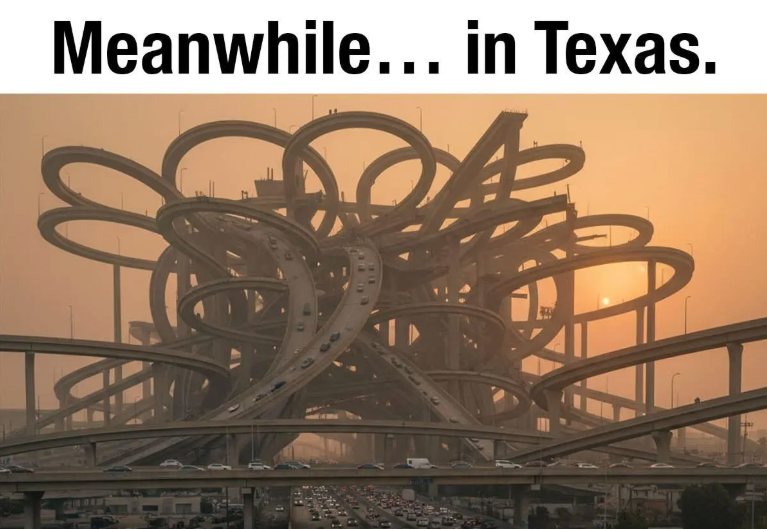
My transit to my apartment exposed me to fleets of luxury cars that were consistently on the extremely broad expressway, a testament to Texas as a wealthy oil-producing state. The breadth is large enough to contain more than twenty cars at once! The flyovers, the skyscrapers, and the crispness of the atmosphere were all too much wonder for me to behold. I kept telling everyone who cared to listen that I was in heaven. I made videos of everything and everywhere and shared them on social media with the friends I had left behind in Africa. America at the time was my Heaven on Earth. You can call it the honeymoon phase but believe it when I tell you that I still feel that way whenever I visit new places in the same country. It is almost as though the architectures are in a constant state of competition with each other. Take Rice University as an example; the Gothic architecture of Sewall is distinct from that of the Rice Business School, as well as other schools like Duncan Hall! When you think you have seen it all, then there is the newly completed Sarofim Hall! I am always in awe of how Americans pay so much attention to architectural details. The only area I find wanting in this peculiar attention to detail is in the rate of materiality, consumerism, and waste in the country. Black Friday sales have been known to cause numerous mishaps in the country, ranging from stampedes to facility damage. People practically wait all year long to buy all they need from participating stores during Black Friday. Most of the time, if one is not careful, they end up buying impulsively which later results in waste due to lack of usage.
Nevertheless, others keep these unused or underused items like furniture and kitchen utensils along the curbs and streets, where people who need them come to pick them up. Call it Finders-Keepers. Facebook Streets, like FreeStuff Houston, also houses these items. You could get them really cheap or even free!
There is always an abundance of food at most American functions, and to my disappointment, disposables are often included, too. The serveries and restaurants dispose of food that would be back home in West Africa, which we could have frozen in batches until we are ready to eat it, even if it is from preceding months, or we could give the food all away to street children. Of course, such a social class system is not so obvious here; therefore, I understand. When my friends and I went on ice cream treats, the portions were so large. Same as the food portions. It was just so strange to me. Again, in my first few months here, I would secretly look into the garbage and see reusable containers and trash that I would shake my head at in disappointment, hoping to scavenge many of them, wash them, and ship them back to my friends who would likely need them back home. Now, I have grown accustomed to it. However, I am incredibly grateful to the environmental African diaspora artists, such as Nnenna Okore and El-Anatsui, in America, who constantly convert this waste into wealth while also saving the environment.
Another thriller for me, the cashless society I found myself in. I was so accustomed to using physical cash back home that for months, when I did not have any cash at hand, I felt so weird. It was strange to me, coming from a country where people trusted cash at hand over electronic transactions. It was new, but I found it easily acceptable. Another more acceptable shocker is the ability to return goods you are not satisfied with, whether bought online or in-store, and have your cash fully refunded, even after weeks. Never in the history of returning a product has it worked out without both sellers and consumers hurling insults at each other and calling each other out on social media to those who care to listen. Returning online products here is more seamless than I have ever known.
Lastly, Halloween, Thanksgiving, and other celebrations and observations are so new to me. They are things we see only on movie screens; therefore, experiencing them firsthand was beyond shocking to me. These experiences are memories that will last me for a lifetime!
About the author
Osinachi Okafor is a third-year Ph.D. student in Art History at Rice University, Houston, Texas, USA. She is currently a member of GSLAB (Graduate Student Library Advisory Board).
She got her B. A Fine and Applied Art at Nnamdi Azikiwe University, Awka, Anambra State, Nigeria, in 2017, where she works as a graduate assistant and a co-curator of the XX Art Exhibition annually held at Awka Museum Foundation, Nigeria.
Further reading:
Grad School 101: Make visiting weekends work for you by Emily Elia.
Coming to Rice as an international student by Utana Umezaki.
Feeling at home in the U.S. by Rosa Guerra Resendez.