
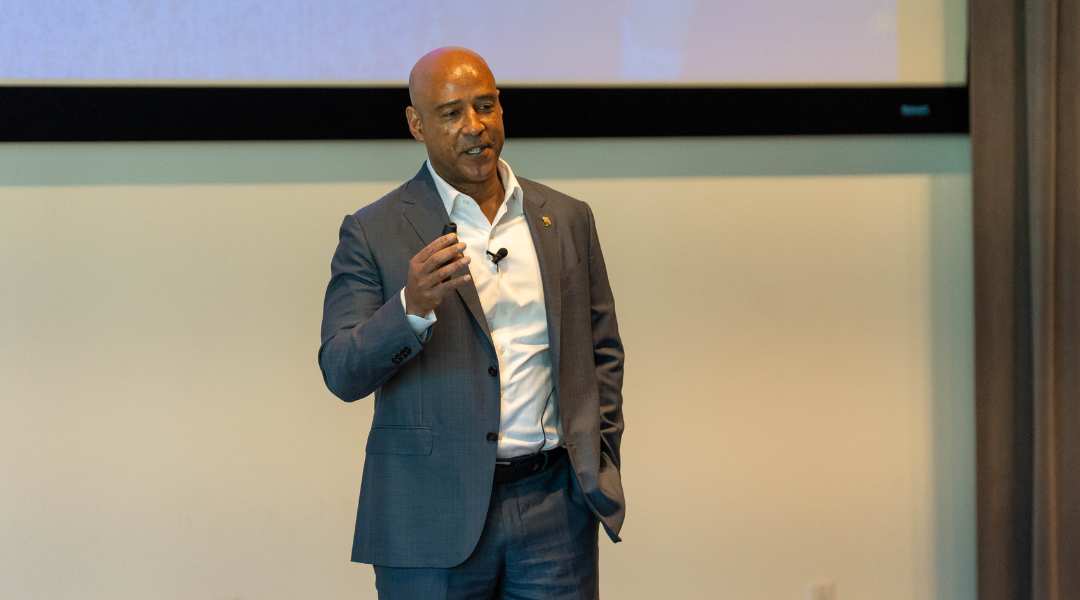
In his annual State of the University address, President Reginald DesRoches detailed an institution in the midst of "unprecedented growth," driven by a strategic surge in graduate enrollment and a record-breaking expansion of the faculty.
"I anticipate that at some point in the next five to seven years, we will have more graduate students at Rice than undergraduate students," DesRoches said. He noted that such a balance is standard among Rice’s peer institutions, particularly those supporting professional schools in business, law, and medicine.
The shift is backed by a massive spike in interest. Over the last three years alone, Ph.D. applications at the university have jumped 80%, while Master’s applications rose 34%.
DesRoches acknowledged alumni concerns about graduate growth while emphasizing that the undergraduate experience would remain strong. Instead, he argued that the two groups are inextricably linked.
"The graduate students are critical to the research mission, but also critical to the undergraduate experience," DesRoches said, pointing out that 67% of Rice undergraduates engage in research, often working side-by-side with doctoral candidates in labs and studios.
The university’s graduate programs are also climbing national rankings. DesRoches highlighted a significant increase in programs ranked in the top 10 and top 25 by U.S. News & World Report, a metric he described as "key to being able to recruit great graduate students."
Rice’s international profile received a boost this year with the arrival of 31 foreign Fulbright fellows. The cohort ranks Rice third in the nation for hosting international Fulbright students, trailing only Harvard and Columbia universities.
Demographically, the graduate school remains a global hub. Roughly 40% of the graduate body is international—representing a far higher concentration than the 15% seen at the undergraduate level—with the largest Master’s enrollments concentrated in the Jones Graduate School of Business and the George R. Brown School of Engineering.
To support this growing population, DesRoches announced several initiatives aimed at improving the quality of life for graduate scholars:
- Financial Support: Qualified doctoral and thesis master’s students often receive departmental stipends of $36,000-$40,000 per year to cover living expenses.
- Campus Amenities: Responding to student feedback, Rice is expanding on-campus dining options for researchers working late hours and increasing subsidies for health benefits.
- Dedicated Space: The administration is focused on creating more "designated spaces" on a campus that has traditionally been designed around the undergraduate residential college system.
"We know we have to keep up with our peers in terms of the stipends that we provide," DesRoches said. "We will continue to make sure that we enhance the amenities that we provide for graduate students."
The president's remarks come as Rice also welcomes its largest-ever undergraduate class, part of a broader "Momentous" strategic plan to increase the university’s total enrollment and research footprint.