
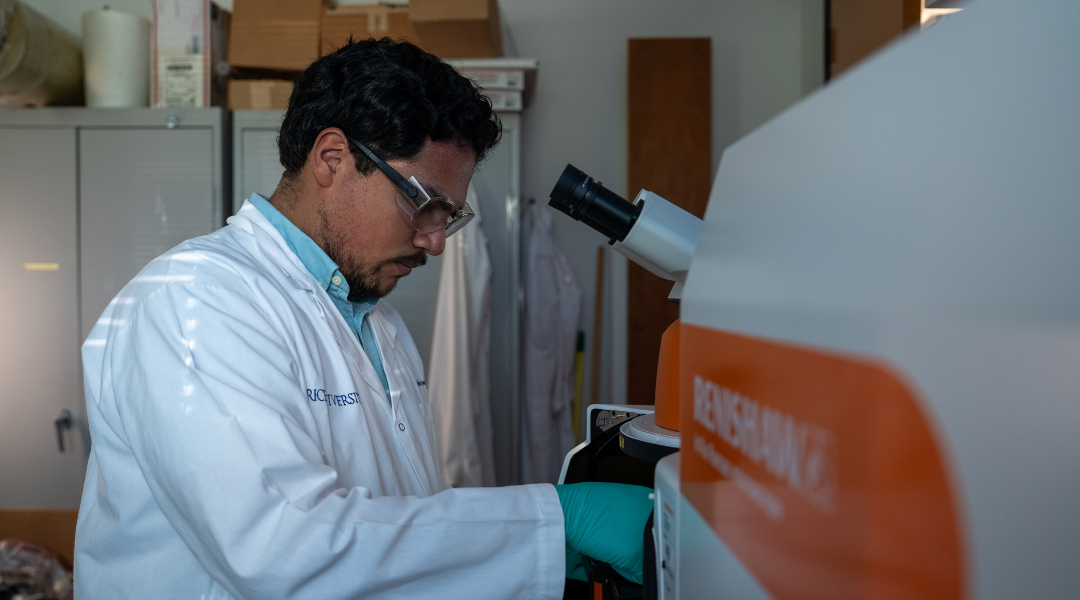
A Rice University graduate researcher is refining a "nanoscale megaphone" to identify invisible environmental threats before they can harm local ecosystems.
Andrés Sánchez Alvarado, a fifth-year Ph.D. candidate in Naomi Halas' research group, is developing high-tech sensors to detect hazardous pollutants, including perfluorinated substances (PFAS) and polycyclic aromatic hydrocarbons (PAHs). These "forever chemicals" are often hazardous at concentrations as low as parts per billion, making them notoriously difficult to track.
Sánchez’s work utilizes Surface-Enhanced Raman Spectroscopy (SERS) and Surface-Enhanced Infrared Absorption (SEIRA). These techniques use plasmonic metal nanomaterials, specifically gold and aluminum, to amplify the interaction between light and chemical molecules.
"To maintain a lake free of hazardous contamination, we first need to know if those chemicals are present," Sánchez said. "By designing the nanomaterials we use, we can target specific types of chemicals during our analysis."
The research stands out for its interdisciplinary approach. While Sánchez synthesizes the innovative nanomaterials at the bench, he also integrates machine learning methodologies to process the complex data. This combination enables a faster and more streamlined analysis than traditional laboratory methods, which can be slow and prohibitively costly.
A graduate of Tecnológico de Monterrey with a degree in Chemistry and Nanotechnology Engineering, Sánchez has already successfully tested his methods on soil, water and biological extracts.
Working within the Halas Group, a hub for nanophotonics and environmental remediation research, Sánchez aims to move chemical sensing out of the specialized lab and into the field. His ultimate goal is to make environmental monitoring accessible to all, particularly for communities that are disproportionately affected by pollution.
"The methods we develop can potentially offer a faster and more accessible solution," Sánchez said. "Ideally, my research will lead to more widespread monitoring and benefit public health."