
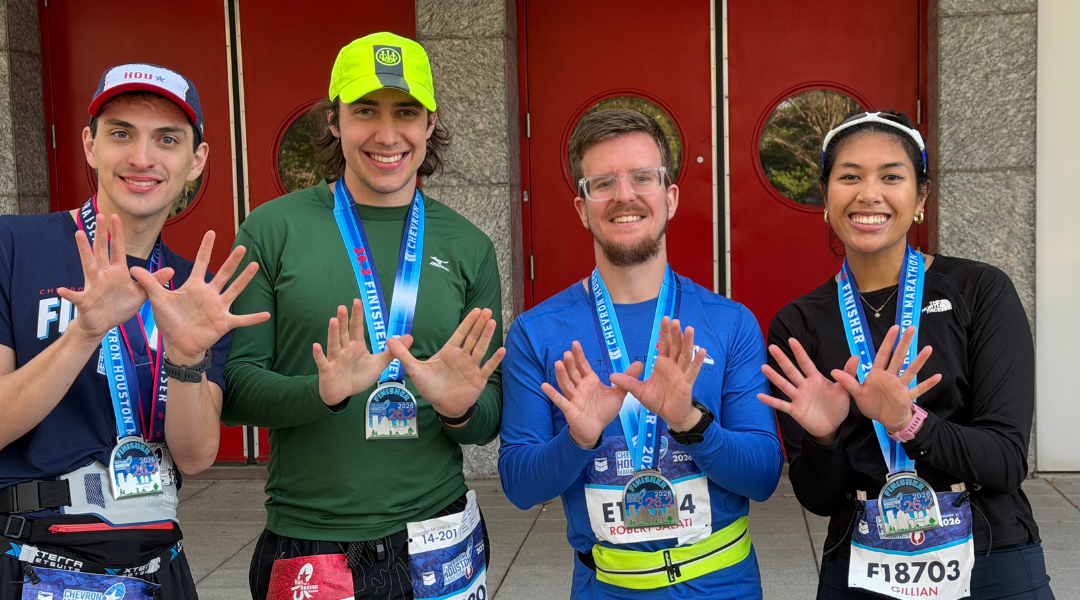
For a group of Rice University graduate students, the ultimate test of endurance this week didn’t take place in a high-tech laboratory or during a grueling dissertation defense. Instead, it unfolded across the flat, spectator-lined streets of Houston during the annual Chevron Houston Marathon, Aramco Houston Half Marathon, and We Are Houston 5K.
From first-time racers to seasoned marathoners, these student-athletes found that the discipline required for high-level research translates remarkably well to the pavement.
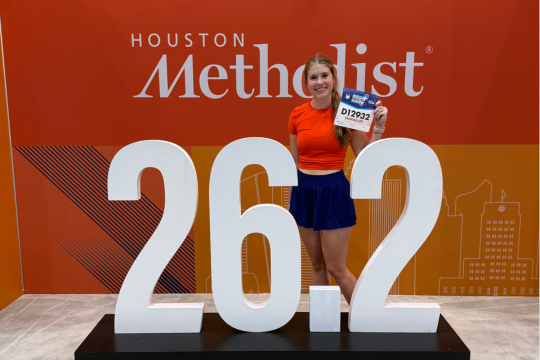
For Emma Raisley, a Ph.D. student in bioengineering, running has become a vital outlet for maintaining a healthy lifestyle amidst the pressures of grad school. Originally a swimmer and volleyball player who "hated running," Raisley picked up the sport as a New Year’s resolution in 2023.
Now a two-time finisher of the full marathon, she finds the quantifiable nature of running—tracking pace, distance, and heart rate—provides the "small wins" that are often missing in the long, uncertain timelines of research. "Even if I know I have a really long day in lab where things might go terribly wrong... at least I have one thing checked off my list," Raisley said.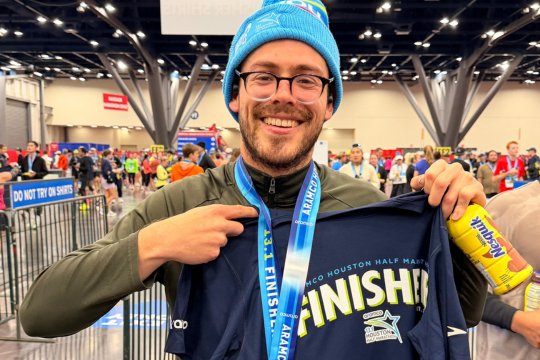
The race weekend also served as a milestone for Rice’s international community. Gabriel Díaz Ramos, a Fulbright student from Mexico pursuing a Ph.D. in applied physics, completed his first half-marathon. Despite training solo, Ramos found the race day atmosphere infectious, choosing to run without music to soak in the cheers and the changing scenery from downtown to Rice and Buffalo Bayou.
"You feel the city differently when you run than when you drive," Ramos noted, highlighting the rare experience of seeing Houstonians out of their cars and cheering on the streets.
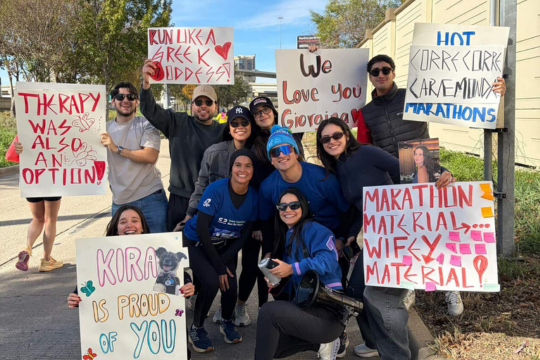
Similarly, Alan Salceda Monge, a Fulbright student in engineering management and leadership from Mexico, was inspired to tackle the full marathon to support "CanCare," a charity that provides services to cancer patients.
Monge described the training as a "full-time job" that required physical, mental, and social commitment. Despite battling severe cramps from mile 18 to the finish, he completed the race in five hours and six minutes, fueled by the support of the Fulbright community.

For others, the weekend served as a springboard for future ambitions. Syed Fazail Haider, a Fulbright master’s student in computer science from Pakistan, participated in the 5K—his first-ever organized run. Inspired by the 30,000 runners and the city-wide support, Haider has already signed up for his first full marathon in Philadelphia this November. "I believe it’s a really great expression of community," Haider said.
Gillian Audia, a Ph.D. student in bioengineering and a former high school rower, also completed her first marathon. Audia, who initially used running to get back into shape before starting her Ph.D., viewed the race as an item to cross off her endurance "bucket list". Much like the Ph.D. process, she noted that a marathon is a long-term goal that requires immense endurance and "putting in the work".
Beyond these featured stories, the race course was filled with many other Rice graduate students who balance demanding academic schedules with miles of training, appearing on race tracking apps and Strava feeds as a testament to the university's widespread running culture.
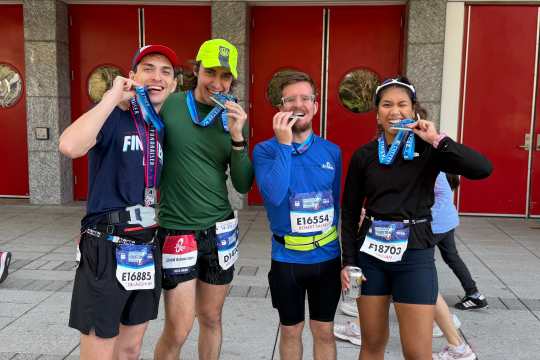
For many graduate students, Houston’s vibrant running scene and the close-knit community at Rice University provide a necessary balance to the rigors of academia. The campus's location is a major draw, offering easy access to the scenic outer loop and the trails of nearby Hermann Park and Buffalo Bayou, which students describe as some of the most beautiful areas in the city.
This environment has fostered a "culture of care" where students support each other’s athletic and personal passions as enthusiastically as their research. Whether through formal groups like the Bioengineering Graduate Student Association’s run club, the "Beer Bike" team event, or informal Thursday morning runs at the Rice Graduate Apartments, the culture at Rice encourages students to step out of the "academic bubble" and integrate into the broader Houston community.
For these researchers, the streets of Houston provide a space where they can find support from friends, lab mates, and even strangers, transforming a solitary sport into a shared journey of endurance.