
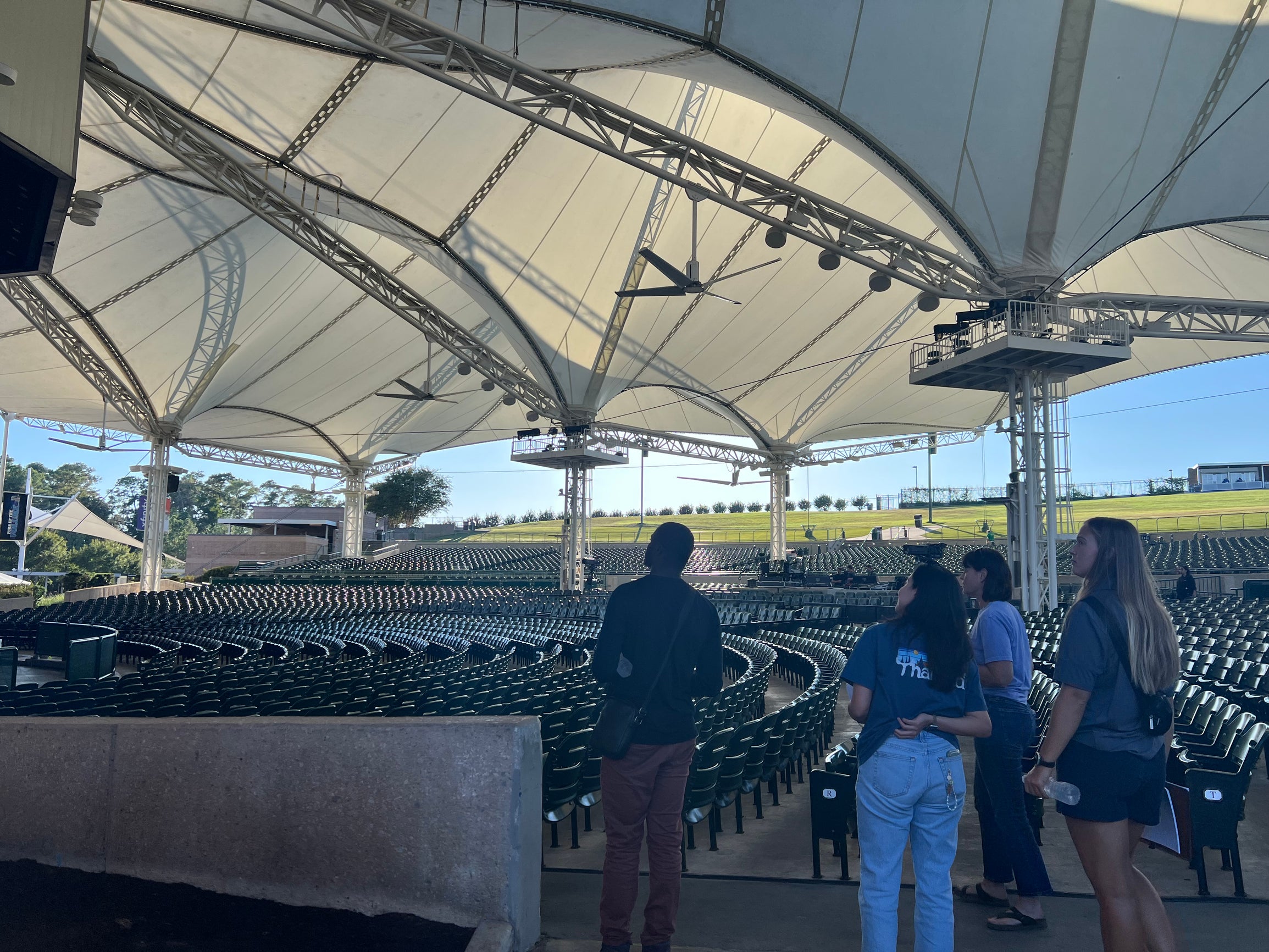
A group of graduate students at Rice University is helping shape the long-term sustainability vision for The Cynthia Woods Mitchell Pavilion through a yearlong “Living Lab” collaboration that blends academic research with real-world impact.
The project, led by faculty affiliated with Rice’s sustainability initiatives, was launched after Pavilion leadership sought support and guidance to strengthen environmental practices at the high-traffic outdoor venue north of Houston. In response, professors designed a special topics course that brought together five master’s students from disciplines including environmental analysis, business and accounting.
“This type of program allows the community to interact with us much more directly,” said director of the Rice Sustainability Institute Carrie Masiello, who co-led the course. “When students have a real problem to solve for a real client, it accelerates their learning and helps them understand the impact of their work in ways that aren’t possible in a traditional classroom.”
The collaboration is part of Rice’s broader “Living Lab” initiative under its strategic plan, Momentous, which positions the university as a testing ground for creative solutions developed in partnership with local organizations, businesses and government entities.
Over the course of the academic year, the student team conducted site visits to the Pavilion — including behind-the-scenes access during live events — to evaluate operations across areas such as waste, energy, water use and guest experience. The Pavilion also provided a stipend to support the students’ work.
Students delivered an initial set of findings to Pavilion executives in the fall and refined their analysis into a final set of recommendations presented in the spring semester. Their work has focused on identifying both existing strengths and opportunities for improvement, particularly around measurement systems and operational efficiency.
While the Pavilion has already implemented a number of sustainability practices — including composting, energy tracking and water-saving measures — the team found that key data gaps make it difficult to fully understand performance or scale those efforts. For example, metrics such as total waste diversion rates, recycling volumes and audience-related emissions are not consistently tracked, limiting the ability to benchmark progress over time.
To address this, the students recommended building a more structured measurement framework that establishes clear baseline metrics and tracks performance at the event level. On the operational side, their recommendations focus on embedding sustainability into day-to-day processes — from standardizing waste-sorting protocols and improving guest signage to optimizing energy use during both peak event times and off-season periods. Together, these improvements would allow the Pavilion to move from isolated sustainability efforts to a more coordinated, data-driven strategy that can be refined and scaled over time.
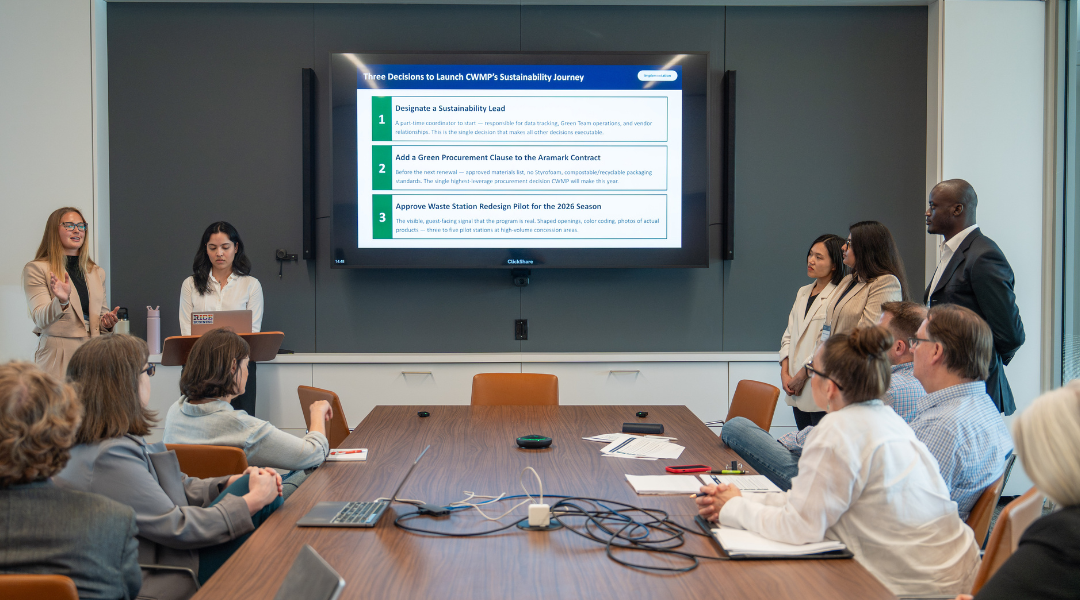
“We found that the Pavilion already has a strong baseline of sustainability practices,” said Martin Arthur Meka Zibi, an MBA student at Rice’s Jones Graduate School of Business, during the team’s presentation. “The challenge now is unlocking the full potential of those efforts through better tracking and strategy.”
The team’s recommendations emphasize starting with measurable, high-impact areas — such as waste diversion and procurement practices — before expanding into longer-term initiatives, such as energy optimization and resilience planning. Faculty say the approach reflects both industry best practices and the realities of operating a large-scale entertainment venue.
For Pavilion leadership, the partnership offers a pathway to thoughtful, data-informed change without disrupting operations.
“We’re in this for the long haul,” said Jeff Young, president and CEO of The Cynthia Woods Mitchell Pavilion. “There are things we can implement right away and others that will take time, but this gives us a roadmap to move forward in a meaningful way.”
Beyond the immediate recommendations, the project highlights the value of interdisciplinary collaboration. By bringing together students from multiple graduate programs, the course created a team equipped to address sustainability from technical, operational and financial perspectives.
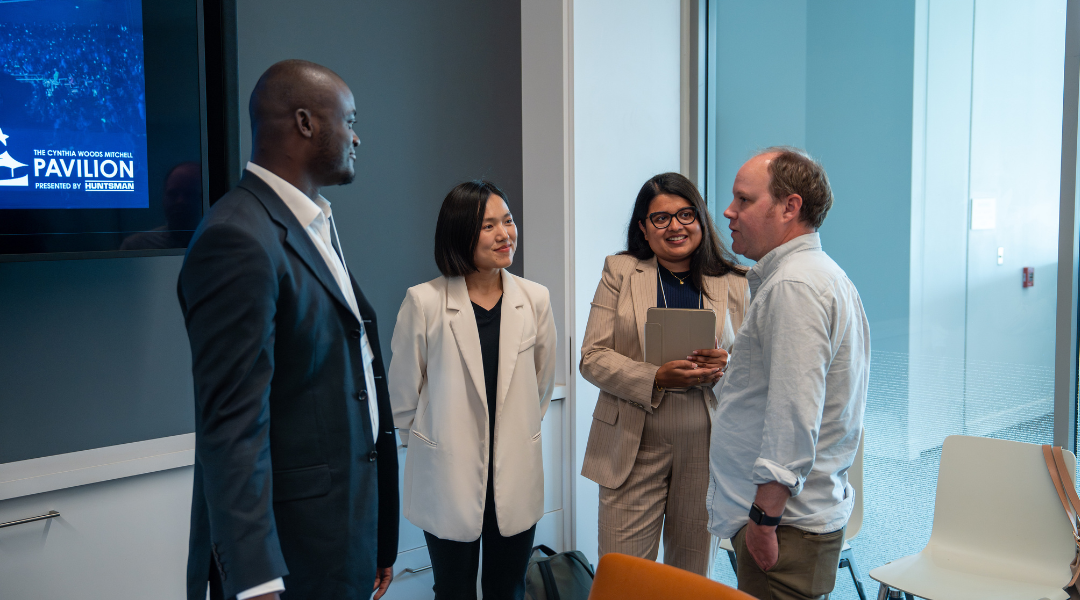
“Having those different viewpoints leads to stronger solutions,” Massiello said. “It benefits both the client and the students.”
Rice leaders say the project is a model for how universities can engage with their surrounding communities to address complex challenges while preparing students for careers that demand practical experience.
“Students love working on hands-on projects with clients who are ready to implement their ideas,” said Richard Johnson, Rice’s senior executive director for sustainability, who co-taught the class with Masiello. “It’s a powerful way to connect education with real impact.”
As the collaboration concludes its first year, both Rice and the Pavilion have expressed interest in continuing the partnership, potentially expanding opportunities for students to contribute to sustainability and other operational initiatives.