
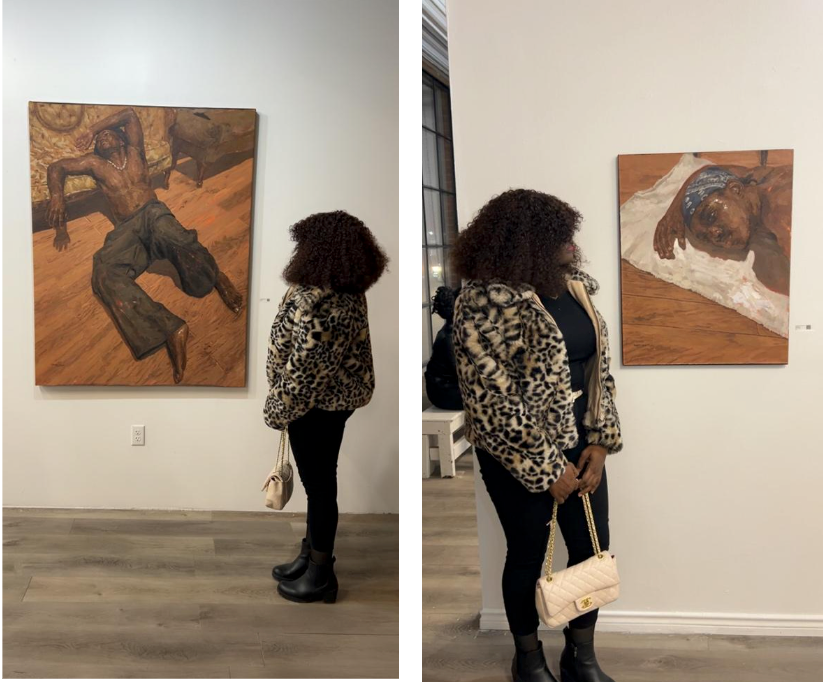
One random lazy weekend, as I scrolled through my Facebook page, I caught a glimpse of an old Nigerian friend advertising a group art exhibition he was a part of titled: A Place of Repose III at Mitochondria Gallery here in Houston. The lethargic old self that I am jumped out of bed to see the thought-provoking art pieces. Opeyemi Mathew Olukotun is a visual artist and a senior colleague whom I met at the Universal Studios of Art in Orile-Iganmu, Lagos State, Nigeria, during my 2016 undergraduate Industrial Training. Though he was not present at the exhibition, Opeyemi had three works on display, but one struck me the most: The painting of a young man, probably in his prime, slouched on the floor against a couch. Apparently, he is exhausted! Exhausted from the day’s tasks and worries. Ain‘t we all? The most fascinating part of the piece is its catchy, deep, reflective title, The Weight They Cannot See IV (2025).
The reset button is what we all deserve to hit when we have exceeded our elastic limit, as the economists call it, both physically and mentally, like the young man in Opeyemi’s painting. Aside from the church or other faith-based institutions, or art and performance centers where people go to relieve stress and burdens, the Rice Wellness and Resource Center is an excellent outlet for Rice students. Rice fosters a community of care for its staff and students. Aren’t we lucky? From a 24/7 phone line (713-348-3311) for urgent situations (not life-threatening) to the RUPD/Rice EMS emergency line (713-348-6000), to in-person office appointments with professional resource counselors, therapists, and Graduate Wellbeing Peers, the options for assistance vary according to preference and availability. One can even go as far as contacting the center on behalf of a friend, course mate, or roommate, like my flatmate, Anekha, did when I struggled with homesickness in my first two years. My first-year counselling session at the Gibbs Center was my first experience of therapy in this life. It got me rolling out so many withheld emotions in the form of tears as I expressed how much I missed home and how the culture shock was dealing ruthlessly with me. It was a memorable experience I never knew I needed. If you are struggling with similar challenges, please give it a try!
As I stared at these two paintings of two exhausted, vibrant youths, slouching on the bare floor, I could not help but wonder what burdens they bear. We all go through a lot that we sometimes do not even acknowledge that the person right next to us may be going through worse. As the Igbos would say: “Akwa na-ekpuchi ihe”, which translates to “Garments cover a lot”. We may never know what one is going through just by looking at them, unless they let us in. When I stared at those lovely, realistic paintings at Mitochondria Gallery, I pondered on what weights Graduate Students may bear that no one sees. A couple of times since I got to Rice, we have received emails on the sudden demise of graduate students; some died from illnesses, others from undisclosed causes, and I wonder what may have burdened such intellectual minds to the point of death, robbing us of the wealth of their expertise and experiences. Here are a few things I can think of from personal and shared experiences.
- Home-Sickness: This often affects students, both domestic and international, who have never been far from home and away from relatives and loved ones.
- Culture-Shocks: Believe it or not, this can pose significant mental stress for affected individuals. Sometimes, it is like unlearning all you have known your whole life and relearning new ones, or even creating a mental space to accommodate a new culture. It can take a toll on one’s mental health and can also rupture relationships.
- Coursework Load: Coursework can be overwhelming if not managed properly. Like, if you are not about to get a good school/work/life balance, you could literally crash like a pack of cards, and I mean it.
- Relationship Conflicts: As adults in Graduate school, most of us are married and even have children. If it is not complex family issues, it is the singles having their own fair share of dating drama. From love-bombing to normal relationship disagreements and breakups, one or all of them are bound to happen, and it takes a toll on our mental health and our academics as a result. Divorce and the death of loved ones are in this category. Being an adult is a full-time job, and it must be managed appropriately to avoid breaking down.
- Immigration Issues: Being an international student is not a cake walk. Any form of immigration policy could disrupt your peace of mind, whether through government policies or expired visas, and your limitations as a student, including your future after graduation, could be draining and tiring to think about while studying. While OISS could provide solid, firsthand information on basic students' immigration issues, the counselling and wellness centers could go a long way toward addressing the mental stress that accompanies them.
- Mental Health Challenges: There are lots of people with diagnosed mental issues like anxiety, amongst many others. Talking to a wellbeing or counselling personnel could go a long way in helping such students.
- Impostor Syndrome: This is a challenge that almost everyone faces in new environments. But, you are more than enough! You made it to Rice, one of the best schools in the USA. It is a huge milestone, and you are no impostor. Talking to a wellness personnel would help a long way.
Rice Wellness and Counselling Centre is a safe space to help let down all these weights we bear that could be affecting our academics and life in general, and the professionals involved know the proper recommendations to give to help us with our needs, including speaking to our professors and the appropriate authorities, as the case may be. Though mental health issues are not taken seriously in some parts of the world, Rice does take them seriously because they really care for us. I think it is safe to refer to the Rice Wellness and Counselling Centre as “A Place of Repose”.
About the Author
Osinachi Immaculeta Okafor is from Ebenator Village, Azigbo town, in Nnewi South LGA of Anambra State, Nigeria, and is a current Ph.D student in Art History. She got her B. A in Fine and Applied Art at Nnamdi Azikiwe University, Awka, Anambra State, Nigeria in 2017. Read more about the author here.
Further Reading:
What is your Favorite Way to Deal with the Summer Heat?