
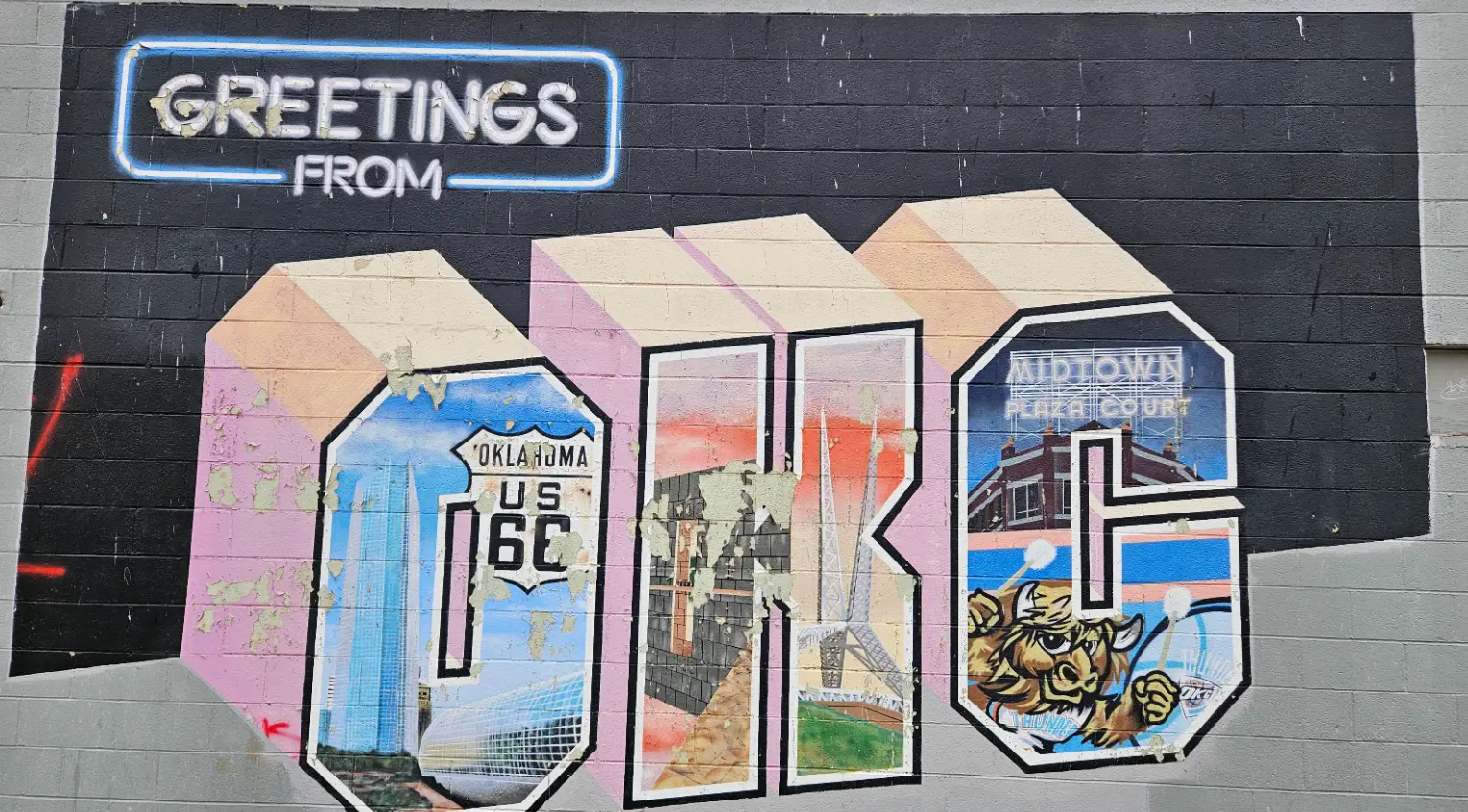
Let’s be honest—Oklahoma probably isn’t the first place that pops into your head when you think about a road trip. But it really should be! The state has so much more to offer than most people realize: scenic mountains, endless tallgrass prairies, fascinating Indigenous heritage sites, historic forts, impressive museums, and some quirky roadside attractions. I spent five days driving through Oklahoma on my own during the last winter break, and it turned out to be one of my favorite trips in recent memory. So, buckle up and follow along as I take you on a journey through the beautiful and wild Sooner State!
Day 1: Houston → Lawton
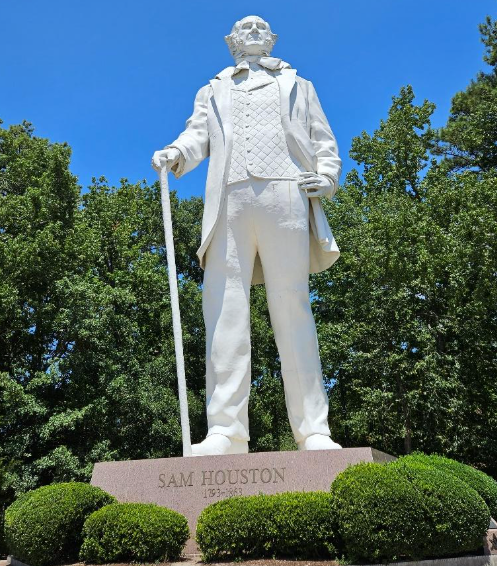
Departing from my apartment in Houston at noon, I began a seven-hour drive to Lawton, Oklahoma—the nearest town to the Wichita Mountains Wildlife Refuge, which I planned to visit the next day. The drive was long but not without highlights. Along I-45, I passed the towering Sam Houston Statue in Huntsville and a few Buc-ee’s (always worth a break!).
If you haven’t been to Dallas–Fort Worth before, it’s a great detour. The Sixth Floor Museum (about JFK’s assassination and legacy), the George W. Bush Presidential Center, and the Fort Worth Stockyards are all worth a visit.
Day 2: Lawton → Wichita Mountains → Washita Battlefield → Oklahoma City
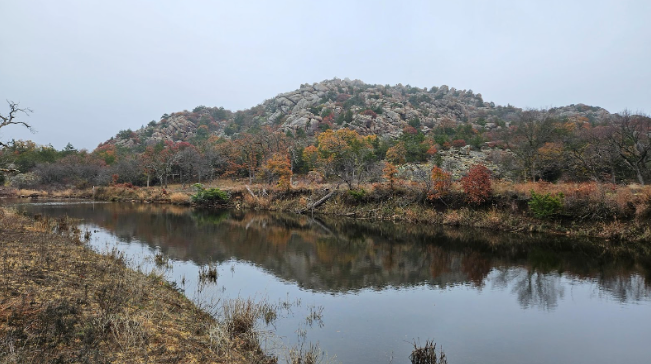
I got up early, fueled up, and drove straight to the Wichita Mountains Wildlife Refuge. Unfortunately, the road to Mount Scott was closed because of heavy fog—but that didn’t stop me from exploring. I stopped at Lake Jed Johnson Dam overlook and hiked a few trails, where I got incredible views of both the lake and the surrounding peaks.
The Holy City of the Wichitas was another cool stop—it’s a replica of ancient Jerusalem built from local granite, and it’s surprisingly peaceful. The best part, though, was spotting a few enormous bison wandering right along the road! They were majestic (and honestly a little intimidating). Before leaving, I stopped by the visitor center to learn more about the refuge’s history and ecology and purchased a souvenir magnet for my collection.


Around noon, I drove north to the Washita Battlefield National Historic Site, where Lt. Col. George Armstrong Custer’s 7th Cavalry attacked Black Kettle’s Southern Cheyenne camp on November 27, 1868. At the visitor center, I watched an informative short film and collected a cancellation stamp for my National Park Passport. I then walked the paved trail through the windswept tallgrass, following numbered stops that provided excellent historical context.

By early evening, I was on the road again—this time to Oklahoma City.
Day 3: Oklahoma City → Guthrie → Tulsa
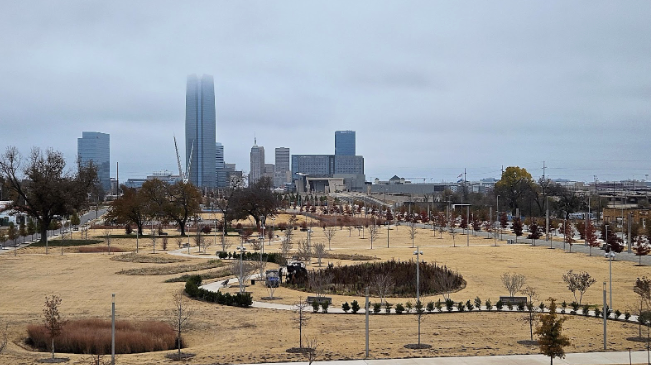
I started the day exploring Oklahoma City, beginning at Scissortail Park, which offers a great view of the downtown skyline. I then visited the Centennial Land Run Monument in the Bricktown River Walk Park, which vividly depicts the 1889 Land Rush.

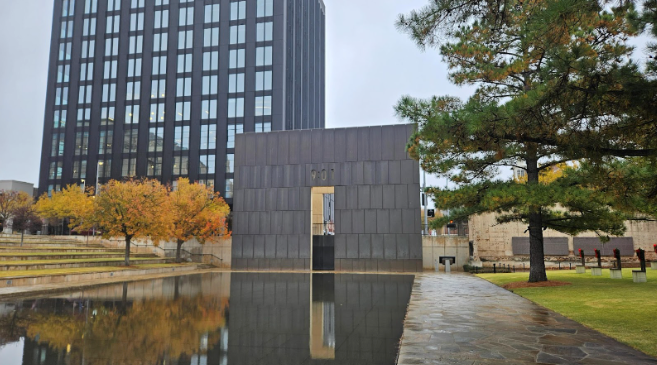
Next, I stopped at the Oklahoma City National Memorial, commemorating the victims of the 1995 bombing, before heading to the Oklahoma State Capitol. I joined a free guided tour and learned a lot about the state’s legislative process and history. After lunch, I explored the Oklahoma History Center, an interactive museum that traces the state’s story from Indigenous civilizations to the modern era.

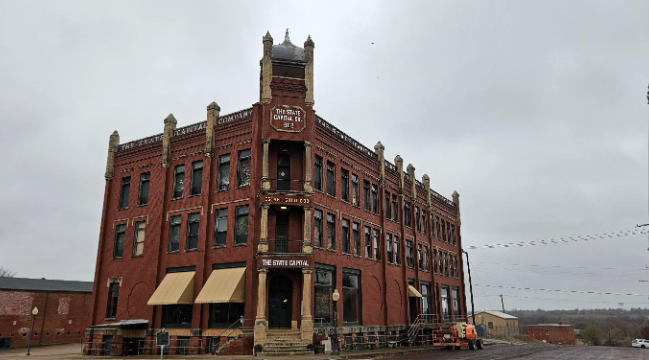
I had to skip the National Cowboy & Western Heritage Museum (saving that for next time!) because I wanted to reach Guthrie, Oklahoma’s first capital, before sunset. I didn’t make it in time for the museums, but just walking through the Guthrie Historic District was like stepping back in time. The red-brick buildings from the 1890s and early 1900s are gorgeous.
From there, I drove on toward Tulsa, catching a short stretch of Route 66—the famous “Mother Road.” A fun roadside stop: Pops 66 Soda Ranch, marked by a giant glowing soda bottle.

Day 4: Tulsa → Pawhuska → Bartlesville → Tulsa
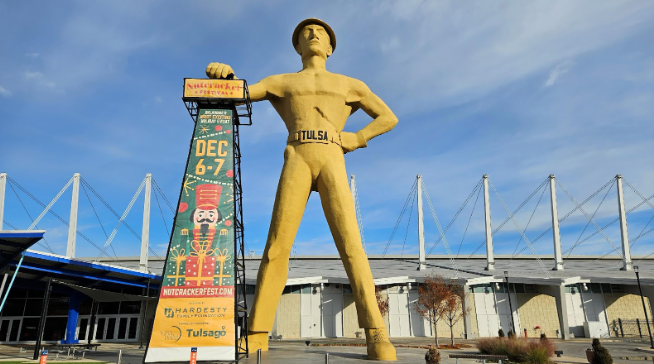
After a long drive the day before, I let myself sleep in a bit. My first stop in Tulsa was the Golden Driller Statue, a massive tribute to the city’s oil heritage. It’s one of those “you have to see it to believe it” landmarks.
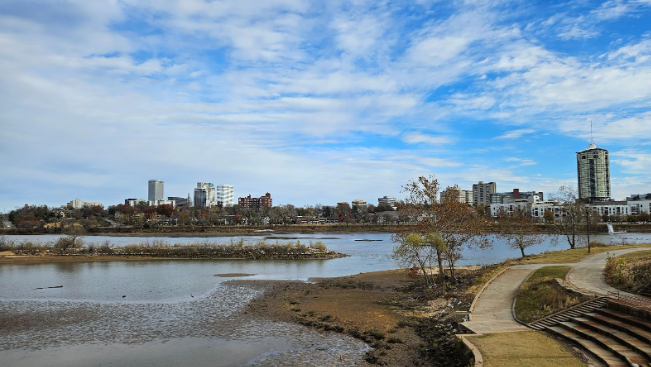
I explored downtown Tulsa, though I was disappointed to find the Woody Guthrie Center closed that day. As a lover of city skylines, I ended my Tulsa morning at River West Festival Park, where the Arkansas River provides a perfect backdrop for photographing downtown.
In the afternoon, I drove to Pawhuska, the capital of the Osage Nation. The town has gained global attention due to David Grann’s Killers of the Flower Moon and its film adaptation. I visited both the Osage Nation Museum and the Osage County Historical Society Museum, which offered valuable insights into Osage history and culture. I even came across a local Christmas tree competition inside the museum—an unexpected delight!
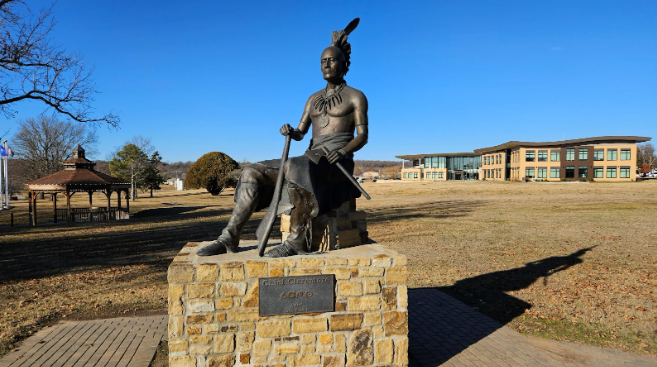
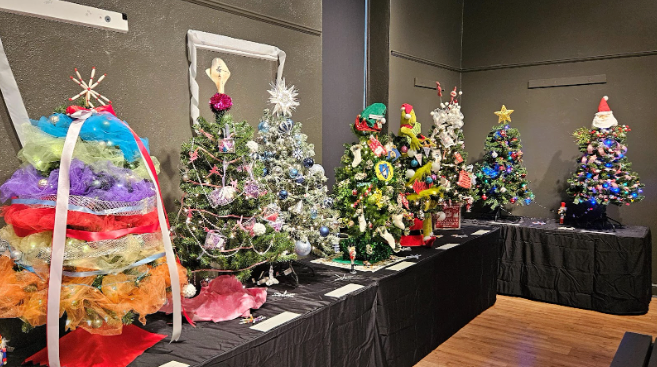
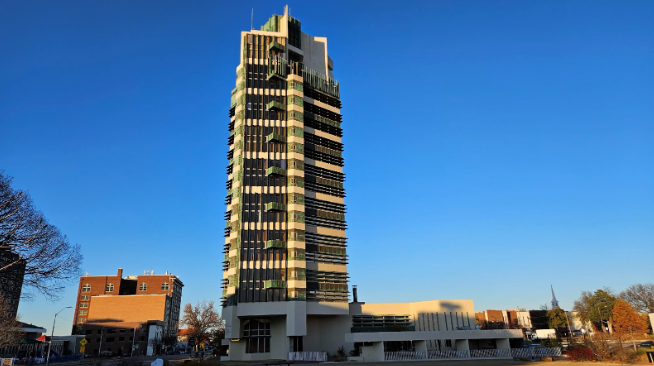
Next, I continued to Bartlesville, longtime headquarters of the Phillips Petroleum Company (later relocated to Houston!). I toured the elegant Frank Phillips Home and Frank Lloyd Wright-designed Price Tower, a striking skyscraper. Then I returned to Tulsa for the night.
Day 5: Tulsa → Fort Gibson → Fort Washita → Eisenhower Birthplace → Houston
Although it’s a 7.5-hour drive from Tulsa back to Houston, I couldn’t resist visiting a few historic sites along the way. After learning so much over the past few days about Oklahoma’s forts, built during the 19th century to facilitate U.S. government policies of westward expansion and Indian removal, I was eager to see some in person.
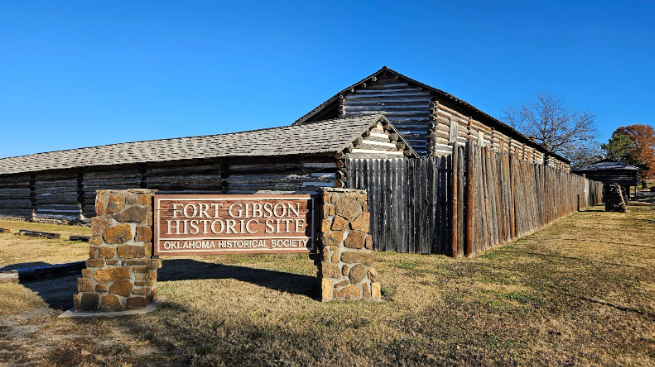
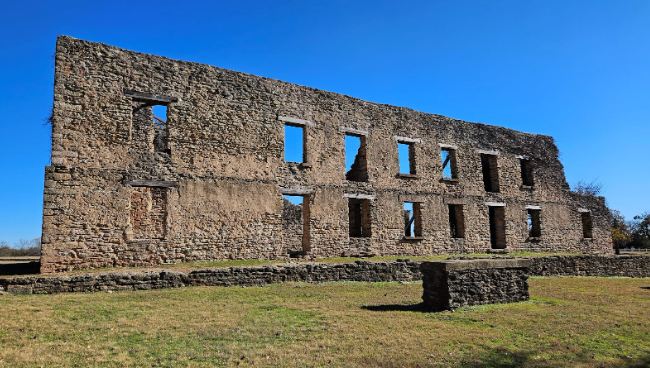
I first detoured to Fort Gibson, a reconstructed 19th-century fort rebuilt as a Works Progress Administration project during the New Deal era. Then I continued to the Fort Washita Historic Site, once established to protect the Chickasaw from raids and later to guard the Texas frontier. It became a key stop for travelers heading to California during the Gold Rush and was ultimately burned during the Civil War. Walking among the ruins and restored barracks, I could really feel the weight of history.
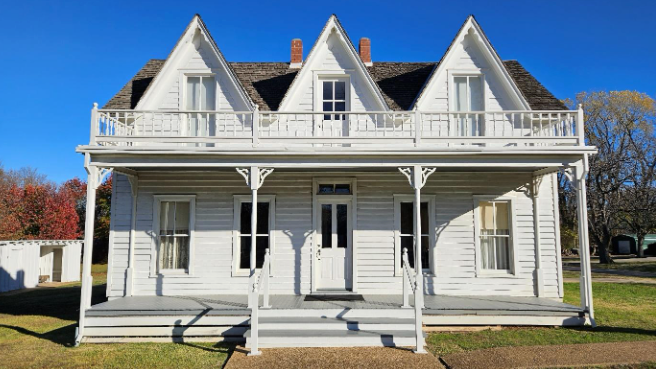
My final stop, shortly after crossing back into Texas, was the Eisenhower Birthplace State Historic Site near Dallas. It was in this white house that the 34th U.S. president, Dwight D. “Ike” Eisenhower, was born in 1890.
By the time I made it back to Houston late that night, I was exhausted but completely satisfied. My Oklahoma road trip had everything: quirky roadside attractions, nature, and history. If you’re looking for a destination that’s off the beaten path but full of surprises, Oklahoma just might be your next great adventure.
About the Author:
Bohan Zhang is from Beijing, China, and is a current Ph.D. Candidate in History. He got his BA in History from Tsinghua University in 2020.
Further Reading:
A traveler’s guide to your great American road trip
Day Trip from Rice: Immerse Yourself in Texas History
Exploring Historic Houses in Houston