“What does funding look like?”
Doctoral students at Rice are typically supported with tuition coverage and a stipend. How many years it runs, and what teaching or research is expected in return, differs by program — ask for the specifics.
“What does funding look like?”
Support for thesis master's students usually comes through a research group or department. Ask what exists, whether it's tied to a particular advisor, and when it's decided.
“What is the total cost?”
Master's programs are tuition-based, but scholarships do exist and employers often contribute. Ask what your program offers and who tends to qualify.
“What is the total cost?”
Funding at this level can vary. Ask what scholarships or assistantships your program offers, and whether studying part-time changes what you qualify for.
“What is the total cost?”
Most professionals self-fund their certificate as an immediate investment in their career trajectory. Ask your advisor how these course credits can seamlessly bridge into a full Rice degree path.
“What is the total cost?”
Pursuing a diploma at Rice is an accessible, high-impact investment. Support may be paired with ensemble work, teaching, or accompanying.
“What does funding look like?”
Support varies by program and department, and it isn't automatic. Ask what exists, whether it's guaranteed, and for how long.
“Where do graduates actually land?”
Rice doctoral graduates go into academia, national labs, and industry research. Which of those a program genuinely feeds is specific — ask where recent graduates landed.
“Where do graduates actually land?”
A thesis master's can send people straight into research roles, or on to doctoral study. Ask which outcomes are most common for this program, and whether the thesis is what employers or admissions committees respond to.
“Where do graduates actually land?”
The Rice name travels, and the connections you’ll build are important. Ask which employers hire from this program and how to get connected.
“Where do graduates actually land?”
The Rice name travels. Ask where this credential has already taken people working in your field. At this level the answers are more concrete than any ranking.
“What does the coursework actually cover?”
Ask to see the syllabus. A Rice certificate is real rigor rather than a survey, and the reading list tells you whether it matches the gap you're trying to close.
“Where do graduates actually land?”
Ask where recent diploma holders are performing, auditioning, or teaching now. In this field the honest answer is a list of names rather than a statistic.
“Where do graduates actually land?”
Ask to connect with our recent alumni to see the power of a Rice education in action. In this field, success isn’t just an abstract percentage; it’s a thriving network of accomplished professionals step-by-step transforming their careers and industries.
“Who would I be studying under?”
At the Shepherd School, who you study with is part of the application itself. Reaching out before you audition is normal — contact details are on the faculty biography pages.
“Who would I be studying under?”
Studio is where most of the teaching happens, and reviews here are public — thesis work is discussed by panels of invited critics alongside faculty. Ask who teaches the studios you would take, who tends to sit on those reviews, and how the core areas of design, history and theory, technology, and practice fit together.
“Who would I be learning from?”
Ask who you would work with directly, and how often you would actually meet. Bring whatever question you care most about — that’s what faculty at these sessions most want to know.
“How does an online program actually work?”
Rice's online programs pair self-paced lectures with weekly live sessions, classes stay small, and the degree is the same one on-campus students earn. Ask how your program splits live and self-paced, and whether you can take any credit on campus.
“What's Houston like?”
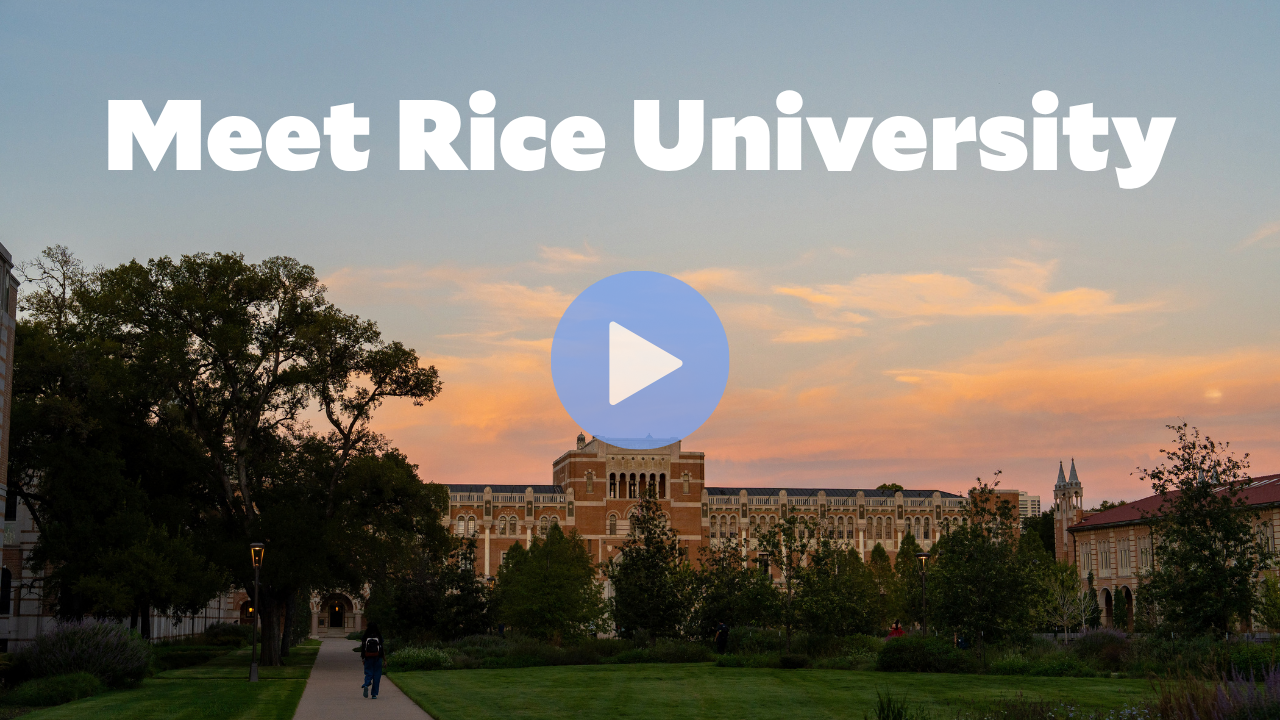
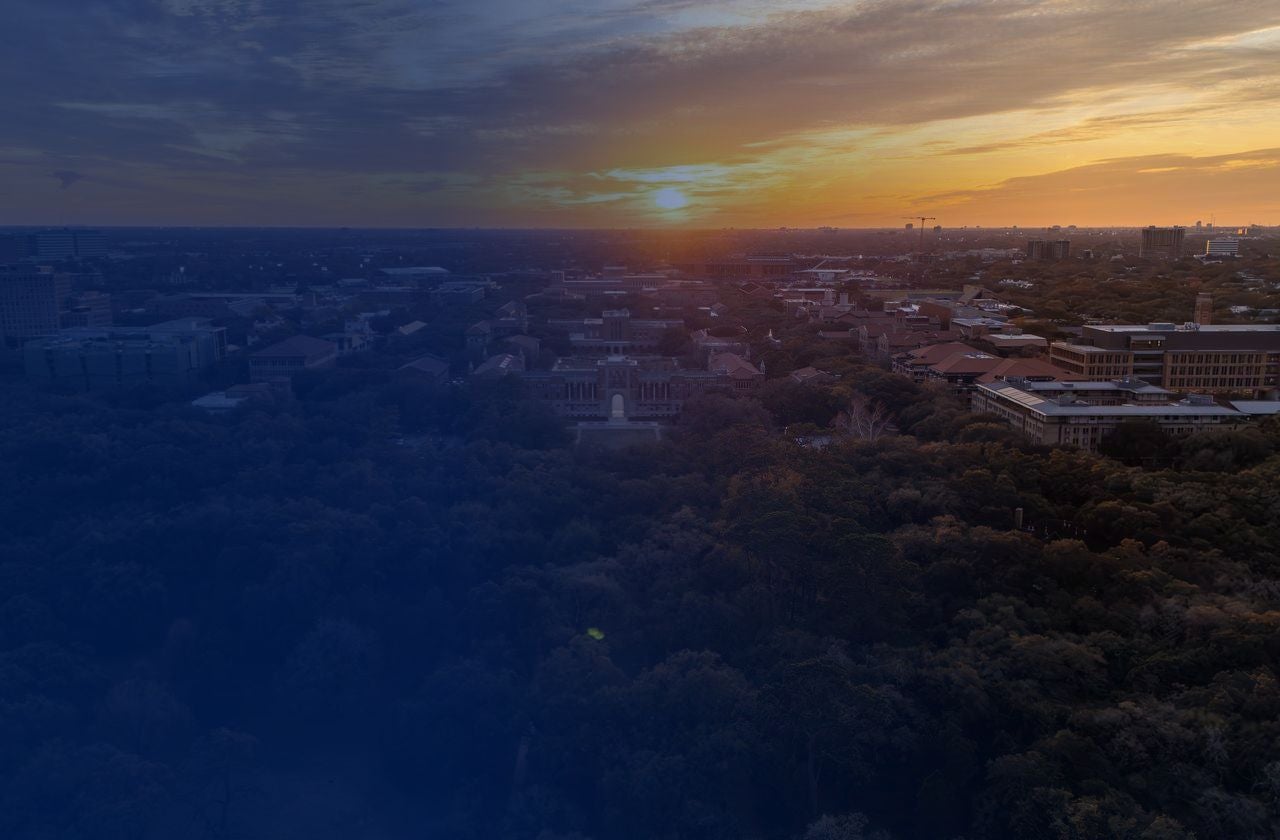
Rice sits on 300 wooded acres next to the Texas Medical Center and the museum district. Most people apply without ever visiting — ask about a campus tour, and ask what the cost of living here is actually like.
|